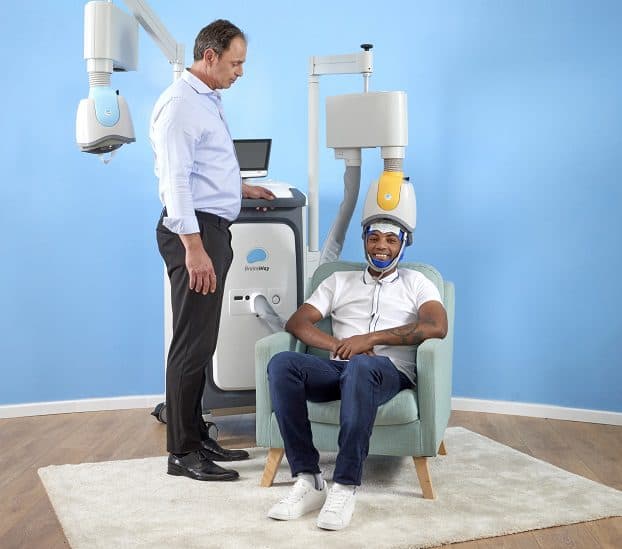
Deep Transcranial Magnetic Stimulation (Deep TMS) is a non-invasive neurostimulation technique that uses magnetic fields to modulate brain activity. Unlike standard TMS, which primarily affects superficial cortical areas, Deep TMS can reach deeper brain structures, up to 4–5 cm beneath the skull, targeting neural circuits involved in various neuropsychiatric disorders.
Theory Behind Deep TMS
1. Electromagnetic Induction
At the core of TMS (including Deep TMS) is Faraday's Law of Electromagnetic Induction. A rapidly changing magnetic field induces an electric field in the brain tissue, leading to neuronal depolarisation and activation.
2. Coil Design (H-Coil)
Deep TMS uses an H-coil, a patented coil design that allows magnetic fields to penetrate deeper brain regions. The H-coil has a broader and more complex winding pattern than the figure-8 coil used in traditional TMS.
- This allows for the stimulation of deeper neuronal networks (e.g., medial prefrontal cortex, anterior cingulate cortex), which are often involved in conditions like depression, OCD, and addiction.
- 3. Targeted Brain Modulation
By focusing on specific brain regions, Deep TMS can modulate abnormal patterns of activity in those areas. It promotes neuroplasticity, the brain’s ability to reorganise itself by forming new neural connections.
FDA-Approved Uses
- Major Depressive Disorder (MDD)
- Obsessive-Compulsive Disorder (OCD)
- Smoking cessation
Late-life Depression
Our recent FDA clearance demonstrates the reduction of depression symptoms among elderly patients, aged 68-86.
Anxious Depression
Off-label uses
- Anxiety disorders
- PTSD
- Bipolar depression
- Chronic pain
- Autism spectrum disorder
- Parkinsons
Advantages of Deep TMS
- Reaches deeper brain structures involved in treatment-resistant conditions.
- Shorter sessions (especially with theta-burst protocols).
- Well-tolerated with minimal systemic side effects.
- Non-invasive and outpatient-based.
- Scientific Basis
Neuroimaging studies (like fMRI and PET scans) before and after Deep TMS show changes in functional connectivity and regional cerebral blood flow, supporting its ability to induce lasting changes in brain function.
Why is Deep TMS is Safe
Deep Transcranial Magnetic Stimulation (Deep TMS) is considered a safe and well-tolerated treatment for various mental health disorders due to several key factors:
Non-Invasive Procedure
Deep TMS does not require surgery, anaesthesia, or implants. It uses magnetic fields to stimulate brain activity without breaking the skin or entering the body.
This eliminates risks associated with invasive procedures (e.g., infections, bleeding, or cognitive side effects).
Adaptable and Monitored Treatment
Parameters like intensity, frequency, and coil positioning are adjusted by trained professionals based on the patient’s clinical profile. Real-time monitoring during sessions ensures safety and comfort.
Growing Evidence Base
Clinical studies demonstrate long-term safety and efficacy for periods of up to a year or more. Used in thousands of clinics worldwide with established protocols and standard safety guidelines.