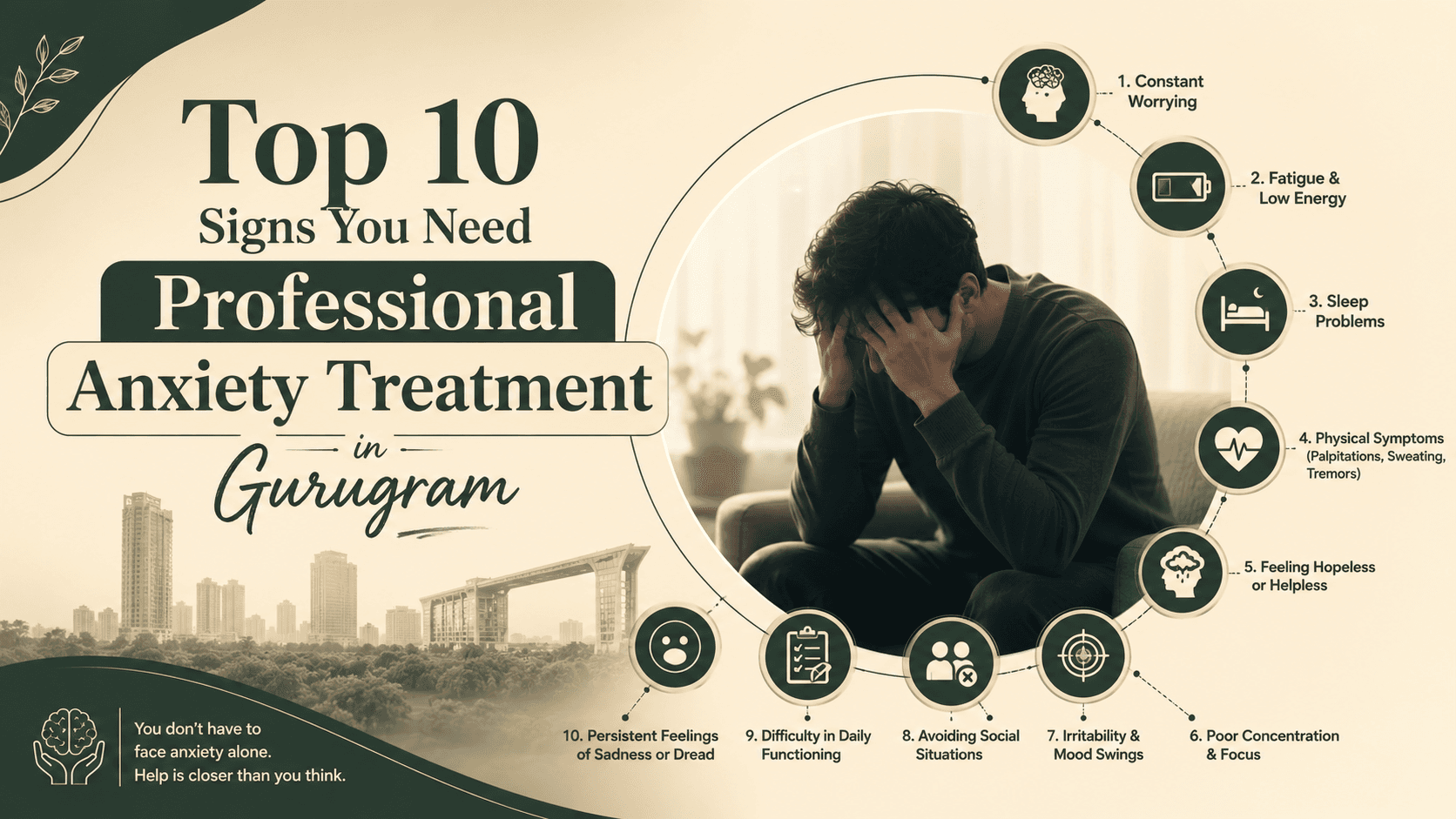
Top 10 Signs You Need Professional Anxiety Treatment in Gurugram
Anxiety is a normal part of all our lives — everyone feels nervous or worried at some point. But the problem starts when these feelings become so frequent, intense, and prolonged that they disturb daily life. Many people keep ignoring their anxiety symptoms, thinking "it's just stress" or "it'll pass on its own," which only makes the condition worse over time. In this blog, we'll look at 10 important signs that indicate it's time to seek professional anxiety treatment.
Sign 1: Constant and Uncontrollable Worry
If you experience excessive worry over even small things and can't control your thoughts, no matter how normal the situation is, this could be an early sign of Generalized Anxiety Disorder. Healthy worry is temporary and fades once the situation resolves, but in anxiety disorder, worry persists continuously without any specific reason.
Sign 2: Physical Symptoms That Are Medically Unexplained
Many people visit multiple doctors for heart palpitations, chest tightness, breathlessness, or stomach issues, but their test results come back normal. If your physical tests are clear but symptoms continue, this could be a manifestation of anxiety. The body often expresses mental stress through physical symptoms.
Sign 3: Sleep Problems
Difficulty falling asleep at night, frequent waking, or being unable to sleep due to racing thoughts is a major indicator of anxiety. When the brain stays in "alert mode," the body can't relax, leading to insomnia or disturbed sleep patterns.
Sign 4: Avoiding Social Situations
If you avoid parties, meetings, or social gatherings simply because you fear being judged or feel awkward, this could be a sign of Social Anxiety Disorder. This avoidance gradually starts affecting personal and professional relationships too.
Sign 5: Difficulty With Concentration and Focus
Anxiety directly affects the brain's cognitive capacity. If you're finding it hard to focus at work, make decisions, or even complete simple tasks, this could be the result of chronic anxiety, where the brain remains constantly in "threat mode."
Sign 6: Irritability and Mood Swings
Anxiety isn't limited to just fear or worry — it can also manifest as irritability, anger outbursts, and sudden mood swings. Overreacting to small things with family members or colleagues can be an indirect sign of anxiety.
Sign 7: Panic Attacks
If you experience sudden intense fear, racing heart, sweating, dizziness, or a feeling that "something terrible is about to happen" without any clear trigger, this could be a panic attack. Panic attacks are extremely frightening experiences and require professional treatment.
Sign 8: Postponing Daily Activities
There's a deep connection between procrastination and anxiety. When tasks, deadlines, or responsibilities start feeling overwhelming, people begin avoiding them, which increases both stress and anxiety — creating a vicious cycle.
Sign 9: Changes in Appetite and Eating Patterns
Some people start overeating due to anxiety, while others' appetite decreases completely. If you've noticed sudden or unexplained changes in your eating habits alongside worry or stress, this could be a sign of anxiety.
Sign 10: Symptoms Lasting More Than 6 Months
If the symptoms listed above have been affecting you for 6 months or longer, and self-help techniques haven't brought improvement, this is a clear indication that it's time to seek professional help. Untreated anxiety over a long period can increase the risk of depression and other serious mental health issues.
What Should You Do Now?
If you notice 3 or more of the signs above in yourself or someone close to you, don't delay. Gurugram has specialized mental health clinics like Positive Mind Care, where experienced psychiatrists thoroughly assess your condition and suggest the best treatment plan. Treatment options range from counselling and medication to, for cases where traditional treatments haven't been effective, advanced Deep TMS Therapy, which is non-invasive and drug-free.
Remember, anxiety is a treatable condition. The sooner you seek professional help, the sooner you can return to your normal, happy life. Ignoring your mental health is just as risky as ignoring any physical illness.
Anxiety and Productivity Connection
Many professionals don't realize that untreated anxiety is also significantly affecting their professional productivity. Constant worry consumes the brain's working memory and decision-making capacity, making even simple tasks take more time and effort. Procrastination, missed deadlines, and increased errors can also be indirect signs that anxiety is impacting daily performance. When people seek treatment and anxiety symptoms decrease, their concentration, efficiency, and overall work quality also show noticeable improvement — an often-overlooked but valuable benefit of treatment.
Anxiety and Depression Connection
Another important point to understand is that anxiety and depression often coexist. Studies show that many anxiety patients also develop symptoms of depression if treatment isn't sought in time, because constant worry and exhaustion can eventually turn into hopelessness and low mood. So seeking treatment early not only manages anxiety but also helps prevent future complications like depression.
The Role of Sleep in Anxiety Recovery
Sleep and anxiety share a particularly tight, bidirectional relationship that deserves special attention. Poor sleep doesn't just result from anxiety — it actively worsens it by impairing the brain's ability to regulate emotions the next day, creating a self-reinforcing cycle that can be hard to break without intervention. Many people don't realize that addressing sleep hygiene early, alongside watching for the signs discussed above, can sometimes prevent mild anxiety symptoms from escalating into a full-blown disorder.
Simple changes such as keeping a consistent sleep schedule, avoiding screens an hour before bed, and limiting caffeine after early afternoon can meaningfully support recovery, though they work best when combined with professional treatment rather than as a standalone fix for clinical anxiety.
How Loved Ones Can Offer Support
If you recognize several of these signs in someone close to you rather than in yourself, your approach matters as much as your concern. Avoid diagnosing them outright or insisting they "just see someone" in a single conversation, which can feel dismissive of what they're experiencing. Instead, gently share specific observations — such as noticing they've seemed more withdrawn lately — and ask open questions about how they're doing, leaving room for them to share at their own pace.
Offering to help research clinics or accompany them to a first appointment, without pushing the timeline, often does more to encourage someone toward treatment than repeated urging ever could.
Frequently Asked Questions
Q1. After how long should I see a doctor for anxiety symptoms? If symptoms continue for more than 2 weeks and are affecting daily life, professional consultation is recommended.
Q2. Can anxiety symptoms be self-managed at home? For mild symptoms, exercise, meditation, and a proper sleep schedule can help, but if symptoms are persistent or severe, professional treatment is necessary.
Q3. What's the difference between a panic attack and an anxiety attack? A panic attack is sudden and intense, typically peaking within 10 minutes, while an anxiety attack builds gradually and can continue for a longer duration.
Q4. Can these signs also appear in children and teenagers? Yes, children and teenagers can also present with similar signs of anxiety, such as school avoidance, irritability, and sleep problems. They too need timely professional attention.
Conclusion
Recognizing the signs of anxiety and acting on them in time is crucial for your mental and physical health. It's better to consult a qualified psychiatrist than to self-diagnose, so they can understand your actual condition and provide the right treatment. Modern facilities now available in Gurugram, like Deep TMS therapy, are making anxiety treatment more accessible and effective than ever before.