Introduction:
Happiness is one of the most desired experiences in human life. People pursue it through relationships, professional achievements, financial security, personal growth and meaningful experiences. Yet, despite having access to more opportunities and conveniences than ever before, many individuals continue to struggle with stress, dissatisfaction and emotional exhaustion. This raises an important question: What actually makes us happy? Is happiness a result of external achievements, or does it begin within our minds?
Psychology and neuroscience suggest that happiness is much more complex than simply experiencing positive emotions. It involves a combination of emotional well-being, life satisfaction, meaningful relationships, personal purpose and the way our brains respond to everyday experiences.The science of happiness helps us understand how our thoughts, behaviours, relationships and lifestyle choices influence our overall well-being. More importantly, research suggests that happiness is not entirely dependent on circumstances; certain habits and psychological practices can help us cultivate it.
What Is Happiness?
Happiness is generally understood as a positive emotional state associated with joy, satisfaction, contentment and fulfilment.However, psychologists often distinguish between two important dimensions of happiness:
1. Hedonic Well-being:
Hedonic well-being focuses on pleasure, positive emotions and life satisfaction. It includes experiences such as enjoying a meal, spending time with loved ones, celebrating achievements or participating in activities that bring joy.
2. Eudaimonic Well-being:
Eudaimonic well-being focuses on meaning, personal growth, purpose and living in accordance with one's values. It involves finding fulfilment through meaningful relationships, contributing to society and developing one's potential.Both dimensions are important. While pleasurable experiences contribute to immediate happiness, meaning and purpose can support deeper and more sustainable psychological well-being.
The Neuroscience Behind Happiness: What Happens in Our Brain?
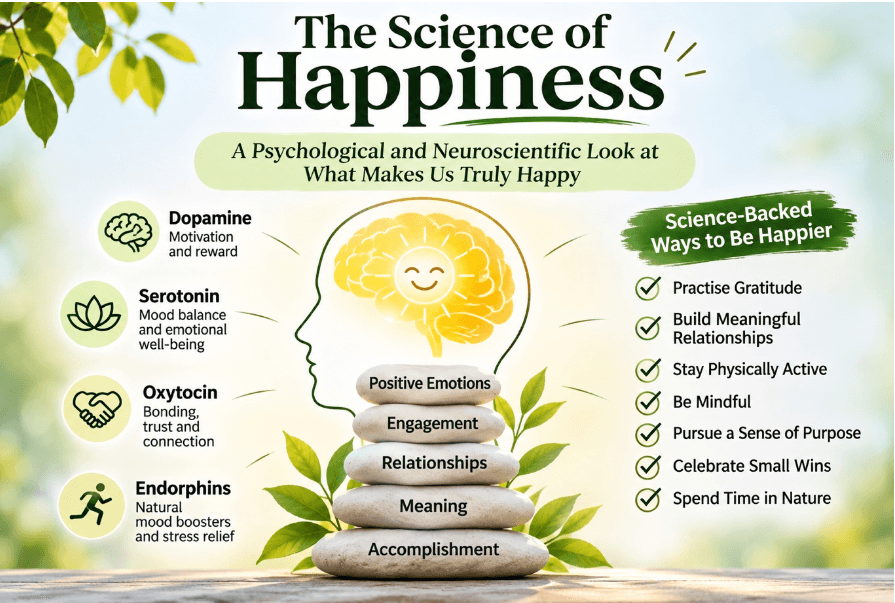
Happiness is closely connected to the functioning of the brain and its complex network of neurotransmitters and neural pathways.Several important neurotransmitters and chemical messengers are associated with mood, motivation, reward and emotional regulation.
1. Dopamine: The Motivation and Reward System
Dopamine plays an important role in motivation, learning and reward processing.When we anticipate or experience something rewarding, dopamine-related neural pathways become active. This encourages us to repeat behaviours associated with positive outcomes.For example, achieving a personal goal, learning a new skill or completing a challenging task can activate reward-related processes.
However, happiness should not be confused with constantly seeking dopamine stimulation. Repeatedly chasing instant gratification through social media, shopping or other rewarding activities may not necessarily create lasting life satisfaction.
2. Serotonin: Mood and Emotional Regulation
Serotonin is involved in regulating mood, sleep, appetite and several other physiological functions.Healthy serotonin signalling is associated with emotional regulation and overall well-being. However, happiness cannot be explained by serotonin levels alone, as mental health involves multiple interacting biological, psychological and environmental factors.
3. Oxytocin: The Chemistry of Social Connection
Oxytocin is involved in social bonding, trust and interpersonal attachment.
Meaningful interactions, emotional closeness and supportive relationships can contribute to positive emotional experiences.
This highlights an important aspect of happiness: human connection is not merely a social preference; it is closely related to psychological well-being.
4. Endorphins: The Body's Natural Pain Modulators
Endorphins are naturally produced chemicals that help regulate pain and can contribute to positive feelings.
Physical activities such as exercise may stimulate endorphin-related processes, contributing to improved mood and a sense of well-being.
It is important to remember that happiness does not depend on one particular chemical. It emerges through the interaction of biological, psychological, social and environmental factors.
The Role of Positive Psychology in Understanding Happiness
Positive psychology is a branch of psychology that studies human strengths, positive emotions, resilience, happiness and the factors that enable individuals and communities to flourish.
Rather than focusing exclusively on psychological difficulties, positive psychology explores what makes life meaningful and fulfilling.One influential framework is Martin Seligman's PERMA Model, which identifies five important elements of well-being.
Understanding the PERMA Model
P – Positive Emotions
Experiencing emotions such as gratitude, joy, hope, inspiration and contentment.
E – Engagement
Being deeply involved in activities that capture our attention and allow us to use our abilities. This experience is often associated with a state of flow.
R – Relationships
Building healthy, supportive and meaningful relationships with family, friends and the wider community.
M – Meaning
Finding purpose through personal values, meaningful work, relationships or contributing to something larger than oneself.
A – Accomplishment
Setting realistic goals, developing skills and experiencing satisfaction through personal achievements.
The PERMA model highlights that happiness is multidimensional. A fulfilling life involves more than experiencing temporary pleasure.
7 Science-Backed Ways to Cultivate Happiness
Although we cannot control every situation in life, we can develop habits that support positive emotions and psychological well-being.
1. Practise Gratitude
Gratitude involves recognising and appreciating the positive aspects of life.Instead of constantly focusing on what is missing, take a moment to acknowledge what you already have.
You can begin by writing down three things you are grateful for every day. They do not need to be extraordinary. A meaningful conversation, a peaceful morning or completing a task can all be reasons for gratitude.
Regular gratitude practices may help encourage positive thinking and improve subjective well-being.
2. Build Meaningful Relationships
Human connection is one of the important contributors to happiness.
Spending quality time with family, maintaining friendships and developing supportive relationships can provide emotional security and a sense of belonging.
Make time for conversations without distractions. Listen actively, express appreciation and nurture relationships that allow you to feel understood.
3. Make Physical Activity a Part of Your Routine
Physical activity supports both physical and psychological health.
Regular exercise can improve mood, reduce stress and support better sleep. Activities such as walking, cycling, yoga, swimming and dancing can contribute to emotional well-being.
You do not need an intense workout routine to begin. Even small amounts of regular movement can be beneficial.
4. Practise Mindfulness
Mindfulness involves paying attention to the present moment without immediately judging your experiences.
Many individuals spend considerable time worrying about the future or revisiting past events.
Mindfulness can help bring attention back to the present through breathing exercises, meditation, mindful eating or simply observing your surroundings.
With regular practice, mindfulness may support emotional regulation and stress management.
5. Pursue Meaningful Goals
Having meaningful goals provides direction and motivation.
Goals do not always need to involve professional success or financial achievements. Learning a new skill, improving relationships, helping others or developing a healthy routine can also create a sense of accomplishment.
Focus on realistic goals that align with your values rather than comparing your progress with others.
6. Spend Time in Nature
Natural environments can have a positive influence on psychological well-being.
Walking in a park, spending time around greenery or enjoying a peaceful outdoor environment may help reduce stress and improve mood.
Taking regular breaks from screens and spending time outdoors can also create opportunities for relaxation and reflection.
7. Learn to Accept Imperfection
One of the biggest obstacles to happiness is the belief that life must be perfect before we can feel satisfied.
People often postpone happiness until they achieve a particular career milestone, purchase a house, enter a relationship or reach a specific financial goal.
However, life will always involve challenges and imperfections.
Learning to accept uncertainty, appreciate small moments and develop self-compassion can help create a healthier relationship with happiness.
Happiness vs. Temporary Pleasure: Understanding the Difference
In today's fast-paced world, happiness is sometimes confused with instant gratification.
Social media notifications, online shopping, entertainment and material achievements can provide temporary pleasure. However, these experiences do not always contribute to lasting satisfaction.
Consider the difference:
· Pleasure comes from enjoying an immediate experience, while fulfilment often develops through meaningful activities.
· Temporary excitement may fade quickly, while meaningful relationships can provide lasting emotional support.
· External achievements can create satisfaction, but personal growth contributes to a deeper sense of accomplishment.
· Constant comparison can reduce contentment, while self-acceptance can support emotional well-being.
The goal is not to avoid pleasure but to create a balance between enjoyable experiences and meaningful living.
Why Is Happiness Sometimes Difficult to Experience?
Even when individuals have supportive families, professional stability and comfortable lifestyles, they may still experience unhappiness.
Several psychological factors can influence this experience:
Social Comparison: Constantly comparing our achievements, appearance or lifestyle with others can create dissatisfaction.
Unrealistic Expectations: Believing that we must always feel happy can create pressure and frustration when difficult emotions arise.
Chronic Stress: Continuous stress can affect sleep, concentration, emotional regulation and overall well-being.
Negative Thinking Patterns: Repeatedly focusing on failures, worries and perceived shortcomings can influence our emotional experiences.
Emotional Suppression: Ignoring difficult emotions instead of understanding and processing them can make emotional difficulties harder to manage.
It is important to recognise that happiness does not mean feeling positive all the time. Sadness, anger, disappointment and fear are natural human emotions.
The Importance of Mental Health in Happiness
Happiness and mental health are closely connected, but they are not the same thing.
An individual can experience positive emotions while also dealing with anxiety, stress or other psychological difficulties. Similarly, someone living with a mental health condition can still experience meaningful relationships, moments of joy and personal fulfilment.
Maintaining mental health requires attention to emotional needs, healthy coping strategies and appropriate professional support when necessary.
Counselling and psychotherapy can help individuals understand their emotional experiences, identify unhelpful thought patterns, strengthen coping mechanisms and develop greater self-awareness.
The objective is not to eliminate every negative emotion but to develop the psychological resources needed to navigate life's experiences in a healthy way.
Conclusion: Happiness Is a Journey, Not a Destination
The science of happiness teaches us that a fulfilling life is not built exclusively through wealth, achievements or external circumstances. It develops through a combination of positive emotions, meaningful relationships, personal growth, purpose and psychological well-being.
Happiness does not require a perfect life. It requires learning to appreciate meaningful experiences, accept imperfections and create healthy habits that support emotional balance.Sometimes, happiness is found in achieving a long-term goal. At other times, it is found in a meaningful conversation, a peaceful morning, a small act of kindness or simply feeling comfortable with who you are.You do not have to wait for everything in your life to become perfect before allowing yourself to experience happiness.
At Positive Mind Care & Research Centre, we believe that mental well-being is an essential part of living a meaningful and fulfilling life. Understanding your mind, nurturing positive relationships and seeking support when needed are important steps towards a healthier relationship with happiness.Because happiness is not just about feeling good; it is about living well.