Introduction
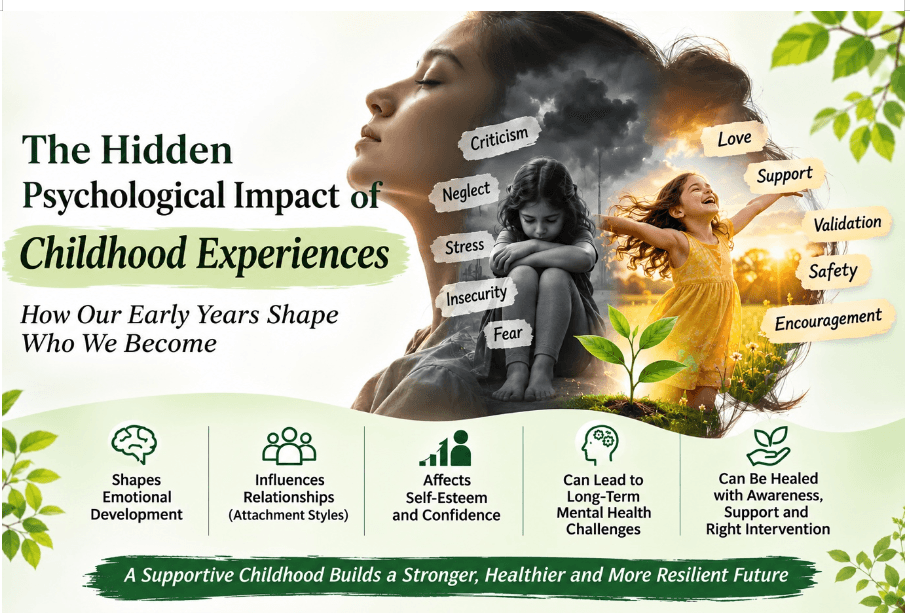
Childhood is often remembered as a period of innocence, discovery, happiness and growth. However, beneath these early experiences lies something much deeper: the foundation of our emotional, psychological and social development.The experiences we encounter during childhood, whether positive or negative, can influence how we think, feel, behave and build relationships throughout adulthood. The words spoken to us, the affection we receive, the environment in which we grow up and the way our emotions are treated can leave lasting impressions on our minds.
Sometimes, the struggles adults experience today are connected to experiences they encountered years ago but never fully understood or processed.
Our childhood does not necessarily determine our future, but it can influence the way we experience the present.
1. Childhood: The Foundation of Psychological Development
Childhood is a critical period for brain development, emotional regulation, personality formation and social learning.
During these formative years, children learn how to understand emotions, develop trust, communicate their needs and respond to the world around them. Their relationships with parents, caregivers, teachers and peers play an important role in shaping their psychological development.
· A child who receives consistent love and emotional support may develop a stronger sense of security.
· A child who is frequently criticised may begin to question their abilities and self-worth.
· A child who grows up in an unpredictable environment may become overly alert to potential threats.
· A child whose feelings are acknowledged may develop healthier emotional expression.
These experiences gradually influence the beliefs children develop about themselves and the people around them.
2. The Hidden Impact of Childhood Emotional Neglect
Not all childhood wounds are caused by physical abuse or visible traumatic events. Sometimes, the absence of emotional support can have equally significant psychological consequences.
Emotional neglect occurs when a child's emotional needs are consistently overlooked, dismissed or inadequately addressed.
Statements such as:
· "Stop crying. There is nothing to be upset about."
· "You are too sensitive."
· "Don't question adults."
· "Why can't you be like other children?"
Although these statements may sometimes be spoken without harmful intentions, repeated emotional invalidation can make children feel that their emotions are unimportant.
As adults, such individuals may struggle to:
· Express their feelings openly.
· Ask for emotional support.
· Establish healthy boundaries.
· Recognise and communicate their needs.
· Develop a positive sense of self-worth.
They may become accustomed to suppressing their emotions because they learned early in life that expressing them was unacceptable.
3. Attachment Styles and Adult Relationships
One of the most important psychological concepts associated with childhood experiences is attachment theory, developed by psychologist John Bowlby and further explored by Mary Ainsworth.
Early relationships with caregivers influence how children develop emotional connections and expectations about relationships.
Four commonly discussed attachment patterns include:
Secure Attachment: Individuals generally feel comfortable with emotional closeness, trust and independence.
Anxious Attachment: Individuals may experience fear of abandonment, seek frequent reassurance and become sensitive to changes in relationships.
Avoidant Attachment: Individuals may struggle with emotional intimacy, prefer excessive independence and find it difficult to express vulnerability.
Disorganised Attachment: Individuals may experience conflicting feelings about closeness and safety, particularly when early caregiving relationships were frightening or unpredictable.
These patterns are not permanent personality labels. Attachment can change through supportive relationships, self-awareness and therapeutic intervention.
4. How Childhood Experiences Influence Self-Esteem
The way children are treated often becomes part of the way they eventually treat themselves.
Repeated criticism, comparisons, unrealistic expectations and a lack of appreciation can contribute to negative self-beliefs.
For instance, a child who frequently hears that they are not good enough may grow into an adult who constantly seeks validation, fears failure or struggles to acknowledge achievements.
Some common adult patterns associated with negative childhood experiences include:
· People-pleasing: Constantly prioritising others to avoid rejection or conflict.
· Perfectionism: Feeling that mistakes make one unworthy of acceptance.
· Fear of failure: Avoiding opportunities because of the fear of criticism.
· Self-doubt: Questioning personal decisions and abilities.
· Difficulty accepting compliments: Struggling to believe positive things about oneself.
Understanding these patterns can help individuals recognise that their self-critical thoughts are not necessarily facts. They may be learned beliefs that can be challenged and changed.
5. Childhood Trauma and Its Long-Term Psychological Effects
Adverse childhood experiences (ACEs) refer to potentially traumatic events occurring during childhood, including abuse, neglect and household challenges such as exposure to domestic violence or substance misuse.Research suggests that a higher number of adverse childhood experiences is associated with an increased risk of certain mental and physical health difficulties later in life.
Potential psychological effects include:
· Anxiety and persistent stress.
· Depressive symptoms.
· Difficulty regulating emotions.
· Challenges in maintaining relationships.
· Low self-esteem and feelings of inadequacy.
· Increased sensitivity to rejection or criticism.
· Difficulty trusting others.
It is important to understand that not every child exposed to adversity develops psychological difficulties. The impact depends on several factors, including the nature of the experience, its duration, individual characteristics and the availability of supportive relationships.
A caring adult, a safe environment and timely psychological intervention can significantly support a child's resilience.
6. The Role of Parenting in Emotional Development
Parenting is not about being perfect; it is about being emotionally available, responsive and consistent.
Children need more than food, education, clothing and physical protection. They also need emotional security, validation, encouragement and opportunities to express themselves.
Healthy parenting practices include:
1. Active Listening: Allow children to express their thoughts without immediately judging or dismissing them.
2. Emotional Validation: Acknowledge their feelings, even when their reactions seem disproportionate to adults.
3. Positive Reinforcement: Appreciate effort, progress and individual strengths rather than focusing exclusively on achievements.
4. Healthy Boundaries: Establish rules while maintaining warmth, respect and understanding.
5. Open Communication: Create an environment where children feel safe discussing their fears, mistakes and concerns.
6. Emotional Role Modelling: Demonstrate healthy ways of managing anger, disappointment and stress.
A child who feels emotionally safe is more likely to develop confidence, resilience and healthier interpersonal relationships.
7. Breaking the Cycle: Can Adults Heal From Childhood Experiences?
One of the most encouraging aspects of psychological development is that childhood experiences do not have to define adulthood.
The human brain has the capacity for neuroplasticity, meaning it can adapt and form new connections throughout life. With awareness, supportive relationships and appropriate interventions, individuals can develop healthier emotional and behavioural patterns.
Some helpful approaches include:
Self-Awareness: Identify recurring emotional reactions and explore whether they are connected to earlier experiences.
Cognitive Behavioural Therapy (CBT): Helps individuals recognise and challenge unhelpful thought patterns and develop healthier responses.
Trauma-Informed Therapy: Provides a supportive approach to understanding and processing distressing experiences.
Mindfulness Practices: Encourage awareness of present emotions and reduce automatic reactions.
Healthy Relationships: Supportive connections can help individuals develop trust, emotional security and a sense of belonging.
Self-Compassion: Learning to treat oneself with kindness rather than constant criticism can support emotional healing.Seeking professional psychological support can be an important step when childhood experiences continue to affect everyday functioning.
8. Building Emotionally Healthy Childhoods for the Next Generation
Breaking the cycle of unresolved childhood experiences begins with awareness.
Parents, educators, caregivers and society must recognise that children's emotional well-being is just as important as their academic performance and physical health.
We need to create environments where children:
· Feel safe expressing their emotions.
· Are encouraged to ask questions.
· Are not compared constantly with others.
· Can make mistakes without experiencing humiliation.
· Receive affection without having to earn it.
· Are respected as individuals with their own thoughts and feelings.
A psychologically healthy childhood does not mean a childhood without challenges. It means having the emotional support and resources to navigate those challenges.
Conclusion: Your Childhood Is Part of Your Story, Not the Whole Story
The hidden psychological impact of childhood experiences reminds us that the emotional environment in which a child grows can influence their beliefs, relationships, confidence and overall mental well-being.
Sometimes, an adult's fear of rejection, difficulty trusting others or constant need for approval may have deeper emotional roots. Recognising these patterns is not about blaming parents or revisiting the past endlessly. It is about understanding ourselves and making conscious choices to create healthier futures.Healing begins when we acknowledge our experiences, understand our emotional needs and give ourselves permission to grow beyond the limitations of the past.