Panic Attacks and Anxiety: How Deep TMS Therapy Brings Lasting Relief
Panic attacks are such an intense and frightening experience within anxiety disorders that those who face them often think they're having a heart attack or are about to die. These sudden, overwhelming fear episodes aren't just emotionally exhausting — they also have a deep impact on a person's daily life, confidence, and relationships. In this blog, we'll understand panic attacks in detail and see how Deep TMS Therapy can offer patients long-term relief.
What Is a Panic Attack?
A panic attack is a sudden episode involving intense fear or discomfort that typically peaks within a few minutes. During it, the body's "fight-or-flight" response activates, regardless of whether real danger is present or not. These attacks can happen anytime, anywhere — even during sleep.
Panic Disorder is diagnosed when a person experiences repeated, unexpected panic attacks, along with persistent worry about future attacks, which leads them to start avoiding daily activities or social situations.
Symptoms of a Panic Attack
Panic attack symptoms are so intense that many people end up in emergency rooms, thinking they're experiencing a medical emergency. Physical Symptoms include racing heartbeat or palpitations, chest pain or tightness, shortness of breath, sweating, trembling or shaking, dizziness or light headaceness, and nausea.
Psychological Symptoms include intense fear of losing control or "going crazy," fear of dying, a feeling of unreality (derealization), and an overwhelming sense that something terrible is about to happen. These symptoms generally peak within 10 minutes and gradually subside, but for the person experiencing it, this can be an extremely traumatic experience.
Triggers of Panic Attacks
Panic attacks sometimes come with a specific trigger — like crowded places, closed spaces, or stressful situations — and sometimes occur without any obvious reason at all. Common triggers include excessive stress, major life changes, a history of trauma, excessive caffeine or stimulant use, and sleep deprivation. Some people also have a genetic predisposition that increases their risk of developing panic disorder.
Traditional Treatment of Panic Attacks
Traditionally, a combination of Cognitive Behavioral Therapy (CBT) and medication is used for panic disorder. CBT helps patients understand the physical sensations of panic attacks and cope with them better. Medicines, such as SSRIs or benzodiazepines, provide immediate or long-term symptom relief.
However, some patients don't respond adequately to these traditional treatments, or find medicine side effects unacceptable. In such cases, advanced treatment options become necessary.
Deep TMS Therapy: A New Solution for Panic Disorder
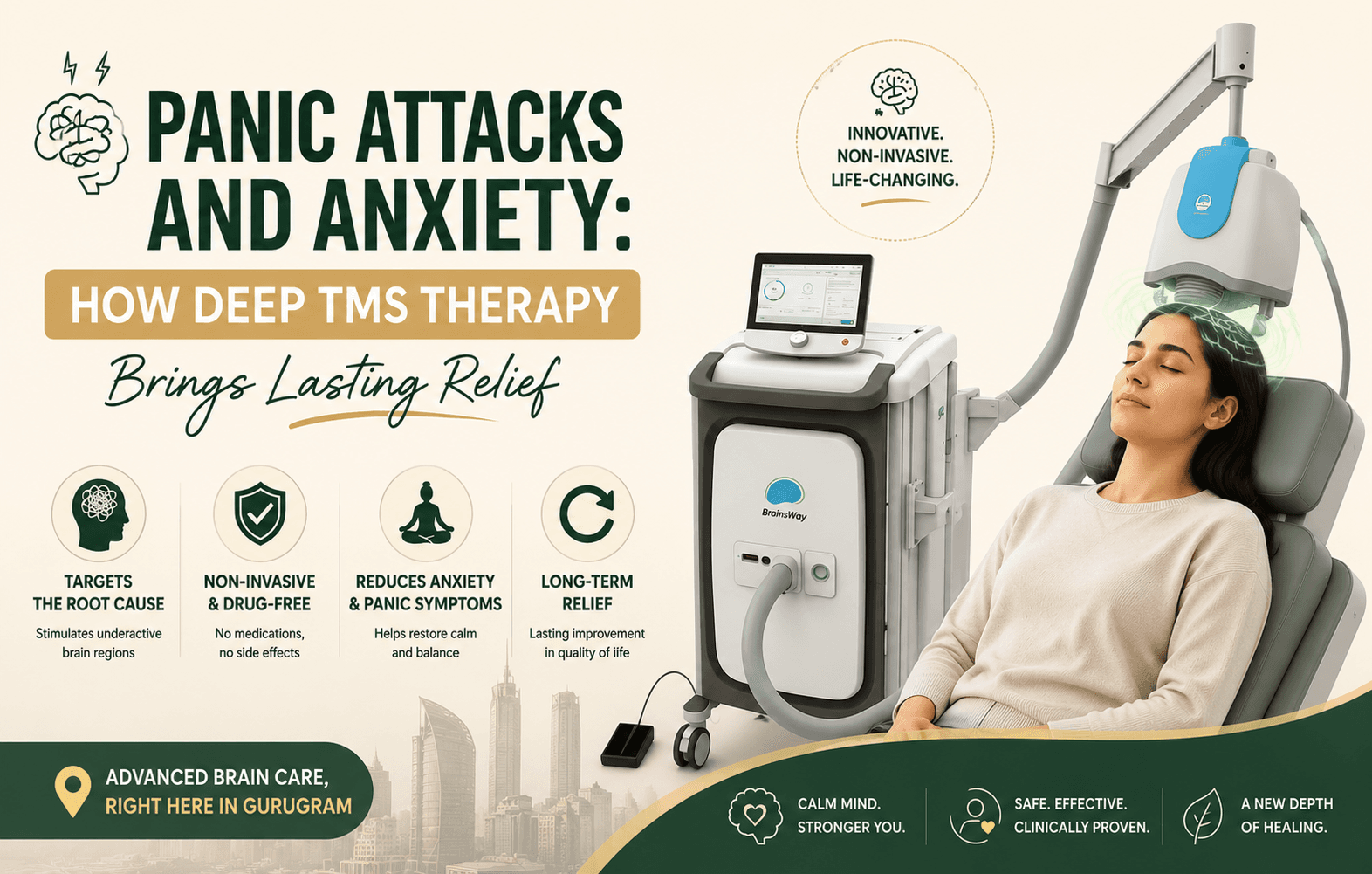
Deep TMS Therapy is a promising treatment option for panic disorder patients. This non-invasive procedure targets specific neural circuits in the brain involved in fear response and anxiety regulation, particularly the connection between the amygdala and prefrontal cortex.
When these circuits are repeatedly stimulated through Deep TMS, the brain gradually learns to better regulate its fear response. This has shown significant reduction in both the frequency and intensity of panic attacks in clinical studies. Most importantly, Deep TMS doesn't produce any sedative effect and doesn't create any chemical dependency, allowing patients to confidently continue their daily life alongside treatment.
The Deep TMS Session Experience
Patients should know that a Deep TMS session is entirely painless and comfortable. Patients can relax in the chair while the coil delivers magnetic pulses that feel like a mild tapping sensation on the scalp. No anesthesia or sedation is given, allowing the patient to immediately resume their normal routine after the session.
Panic Disorder and Agoraphobia Connection
In some panic disorder patients, Agoraphobia can develop over time — a condition where the person starts avoiding situations or places where they feel escaping or getting help would be difficult if a panic attack occurred, such as crowded malls, public transport, or large open spaces. This avoidance gradually restricts a person's life significantly, sometimes limiting them to their own home. This is why early and effective treatment of panic disorder, which can include advanced options like Deep TMS, plays a crucial role not just in addressing immediate symptoms but also in preventing future complications like agoraphobia.
What to Do During a Panic Attack
If you or someone close to you is having a panic attack, a few immediate techniques can be helpful. Focusing on deep, slow breathing — inhale for 4 seconds, hold for 4 seconds, and exhale for 4 seconds — helps calm the body's physiological response. Grounding Techniques, like noticing 5 things around you, touching 4 things, listening to 3 sounds, help bring focus to the present moment, which can reduce the intensity of panic. Reassuring yourself or the person that the panic attack is temporary and will pass is also helpful.
Panic Attacks at Night
A particularly distressing variant that deserves specific mention is the nocturnal panic attack, where a person wakes up suddenly from sleep already in the middle of an intense fear response, with no preceding dream or clear trigger. This can be especially disorienting because there's no obvious "cause" to point to, which sometimes leads people to fear going to sleep altogether, compounding their anxiety with sleep deprivation.
Nocturnal panic attacks are treated using the same overall approaches as daytime panic attacks, but they often warrant closer attention to overall sleep health as part of the broader treatment plan, since disrupted sleep itself can become both a trigger and a consequence.
Building Long-Term Resilience Beyond Treatment
While Deep TMS and other treatments address the acute symptoms of panic disorder, building long-term resilience often involves developing a broader toolkit that patients carry with them well beyond the treatment course. This includes recognizing early warning signs before a full panic attack develops, having a personalized go-to coping strategy ready, and gradually re-engaging with previously avoided situations in a structured, supported way.
Patients who combine clinical treatment with this kind of ongoing self-awareness tend to report not just fewer panic attacks, but also less fear about the possibility of future ones — which is often just as important for quality of life as the attacks themselves, since the anticipatory anxiety between episodes can sometimes be just as limiting as the episodes themselves.
Frequently Asked Questions
Q1. How long does a panic attack last? Generally, a panic attack peaks within 10 minutes and significantly subsides within 20-30 minutes, though residual anxiety may be felt a bit longer.
Q2. Can a panic attack cause physical harm? A panic attack itself isn't physically dangerous, but symptoms (like chest pain) can feel like a heart problem, so if it's a first-time experience, medical evaluation is important to rule out serious conditions.
Q3. How long does Deep TMS take to reduce panic attacks? Patients generally begin noticing a reduction in frequency and intensity after 2-4 weeks of treatment, with full benefits seen after completing the full course.
Q4. Can panic disorder be permanently cured? With proper treatment, many patients experience significant or complete relief from panic attacks, especially when both biological and psychological aspects are addressed.
Conclusion
Panic attacks are certainly frightening, but they are completely treatable. You don't need to live with them. Modern treatments, especially Deep TMS Therapy, are giving panic disorder patients a new, drug-free path toward permanent freedom from their anxiety. If you or someone you know is struggling with panic attacks, seek professional help and reclaim your quality of life.