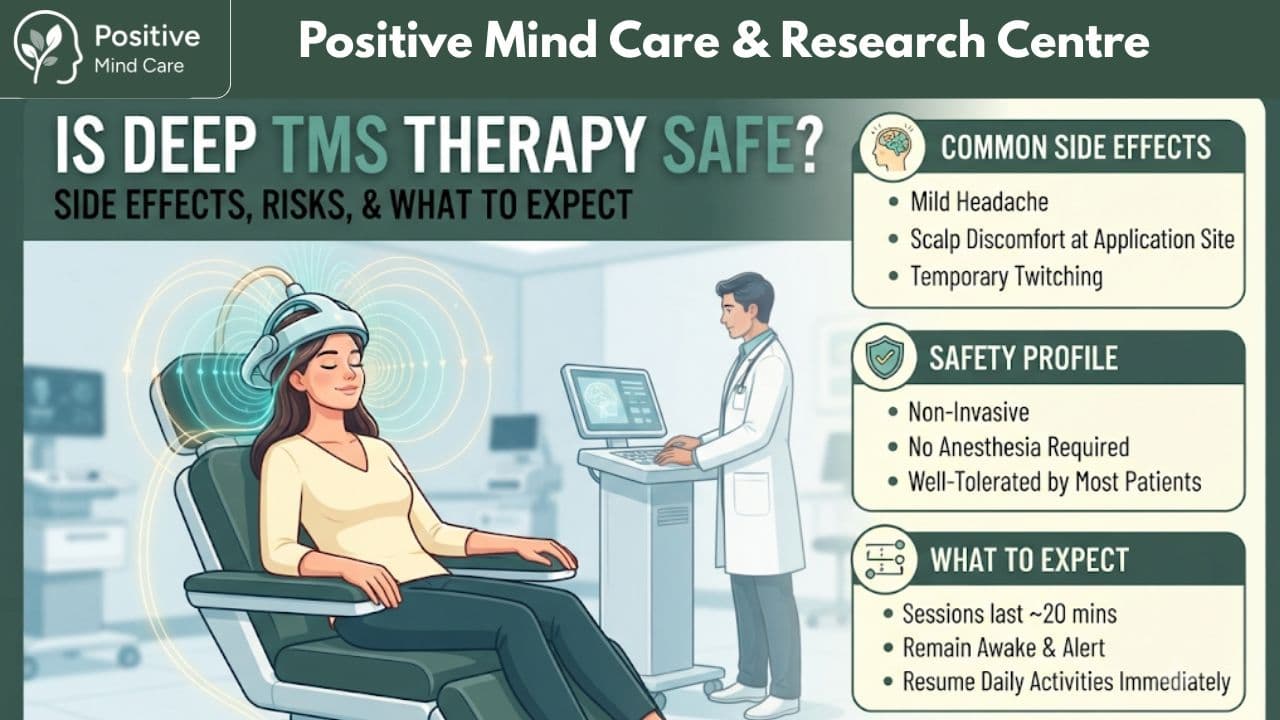
Whenever a new medical treatment is suggested, the first and most natural question that comes to mind is — "is it safe?" Deep TMS Therapy, which is increasingly becoming popular for conditions like anxiety, depression, and OCD, raises the same question for patients and their families. In this blog, we'll discuss in detail the safety profile of Deep TMS Therapy, its possible side effects, risks, and what to expect during treatment.
Safety Profile of Deep TMS
Deep Transcranial Magnetic Stimulation is an FDA-approved treatment, which is a strong indicator of its safety and efficacy. Before receiving FDA approval, this treatment goes through extensive clinical trials in which thousands of patients are carefully studied for its effects. Being FDA-approved means it has met rigorous scientific standards for both safety and effectiveness.
Deep TMS is a non-invasive procedure — meaning it involves no surgery, injections, or any kind of intervention inside the body. During treatment, the patient remains fully conscious and alert, which is a significant safety advantage compared to traditional surgical procedures.
Common Side Effects
Like any medical treatment, Deep TMS can have a few mild side effects, but these are generally temporary and manageable. Scalp Discomfort is the most common side effect — some patients may feel mild discomfort or tingling on the scalp during or shortly after treatment, caused by the coil's contact.
Mild Headache may be felt by some patients after a session, which usually resolves on its own within a few hours and can also be managed with normal painkillers. Light headedness can occasionally be felt, especially during the initial sessions of treatment, as the body adjusts to the new stimulation pattern.
All of these side effects are mild and short-lived, and most patients complete their treatment course without any significant discomfort.
Rare But Important Risks
Very rarely, Deep TMS carries a risk of seizures, especially in patients with a prior history of seizures. This is why a thorough medical history evaluation is conducted before starting treatment. Hearing Changes have also been extremely rarely reported, which is why clinics provide ear protection to patients during treatment.
It's important to understand that these risks are extremely rare, and proper screening combined with professional supervision further reduces their likelihood.
Who Deep TMS May Not Be Suitable For
Deep TMS isn't recommended, or is approached with extra caution, for patients with certain specific conditions. Patients with a history of Seizure Disorder need careful evaluation. Metal Implants — such as certain types of surgical clips, pacemakers, or cochlear implants near the head/neck area — also require precautions for patients.
For Pregnant Women, although Deep TMS is generally considered safe, doctors individually assess whether treatment is appropriate. This is why a comprehensive pre-treatment assessment is so important — to determine the safest and most effective approach for each patient.
Safety Measures During Treatment
Reputed clinics, like Positive Mind Care Gurugram, follow several safety protocols during treatment. A Comprehensive Pre-Assessment evaluates each patient's detailed medical and psychiatric history before starting treatment. Trained Professionals administer Deep TMS sessions, who know how to correctly calibrate the machine and monitor the patient's response.
Continuous Monitoring tracks the patient's comfort and response throughout treatment. Personalized Stimulation Intensity is individually set for each patient, avoiding unnecessary discomfort.
Long-Term Safety
Another important point that gives patients reassurance is that no significant cumulative damage or systemic health risk associated with long-term use of Deep TMS has been found in clinical research. This is especially favorable compared to medicines, whose long-term use can have liver, kidney, or metabolic side effects.
What Patients Should Expect
Patients undergoing Deep TMS for the first time should know that the treatment experience is generally relaxed and manageable. A session lasts 20-30 minutes, during which the patient can sit comfortably, talk, or simply relax. The tapping sensation from magnetic pulses might initially feel a bit unusual, but most patients adjust quickly.
After the session ends, the patient can immediately drive their car, go to the office, or continue any normal activity — there's no need for recovery time.
Deep TMS and Medication Side Effects Comparison
When discussing safety, it's helpful to compare Deep TMS with the side effects of traditional anxiety medicines. Common side effects of medicines like SSRIs/SNRIs can include weight gain, sexual dysfunction, nausea, drowsiness, and emotional numbness, which can sometimes persist for months or years as long as the medicine is continued. Benzodiazepines, sometimes prescribed for anxiety, carry significant risk of dependency and withdrawal symptoms.
In comparison, the side effects of Deep TMS — mild headache, scalp discomfort — typically resolve the same day and leave no long-term systemic impact. This is why many patients, especially those already struggling with medicine side effects, find Deep TMS a favorable alternative.
The Importance of Choosing a Trained Provider
Not all Deep TMS providers offer the same level of safety oversight, which makes choosing where you receive treatment just as important as choosing to pursue the treatment itself. Machines need to be properly calibrated and maintained, and the staff administering sessions need specific training in motor threshold determination, coil positioning, and recognizing any adverse reactions early.
When researching a clinic, it's reasonable to ask directly about the qualifications of the staff operating the equipment, how the machine is maintained, and what protocols are in place if a patient reports unexpected discomfort. A transparent clinic will answer these questions readily.
Putting Safety Concerns in Perspective
It can help to put Deep TMS's safety profile into a broader perspective by comparing it to other commonly accepted medical procedures. Many routine interventions people undergo without hesitation — such as certain dental procedures or minor outpatient surgeries — carry comparable or even higher risk profiles than Deep TMS, yet receive far less scrutiny simply because they're more familiar.
This isn't meant to dismiss legitimate questions about any new treatment, but rather to encourage evaluating Deep TMS's risk profile on its actual evidence rather than unfamiliarity-driven hesitation alone, especially given how extensively it has now been studied across multiple countries and patient populations over the past two decades.
Frequently Asked Questions
Q1. When can normal activities be resumed after Deep TMS therapy? Immediately. There's no need for recovery time since sedation isn't involved.
Q2. Does Deep TMS have any negative impact on memory? No, clinical research has found no negative impact of Deep TMS on memory or cognitive function. In fact, some patients report improved focus and mental clarity after anxiety symptoms decrease.
Q3. Is Deep TMS safe for children? Deep TMS is generally approved for adults. Its use in children and teenagers is considered only according to specific clinical guidelines and careful evaluation.
Q4. What should I do if I feel discomfort during treatment? You can immediately inform your treating professional, who can adjust the stimulation intensity according to your comfort level.
Conclusion
Deep TMS Therapy is a well-researched, FDA-approved, and generally safe treatment option that provides drug-free relief for anxiety and other mental health conditions. As with any medical treatment, some mild side effects are possible, but serious risks are extremely rare, especially when treatment is delivered by trained professionals with proper screening. If you're considering Deep TMS, openly discuss your medical history with your psychiatrist so they can accurately assess its suitability for you.