Introduction
In today's digital world, online gaming has become one of the most popular forms of entertainment. From multiplayer games and competitive esports to mobile gaming and virtual worlds, millions of people spend time playing games every day. While gaming can improve problem-solving skills, provide entertainment, encourage teamwork, and offer opportunities for social interaction, excessive and uncontrolled gaming can sometimes become a serious concern.When gaming begins to interfere with an individual's daily responsibilities, relationships, academic performance, professional life, and psychological well-being, it may indicate a pattern of problematic gaming. One condition associated with this behaviour is Internet Gaming Disorder (IGD).
Internet Gaming Disorder highlights the importance of understanding the relationship between technology, behavioural patterns, and mental health.
What Is Internet Gaming Disorder?
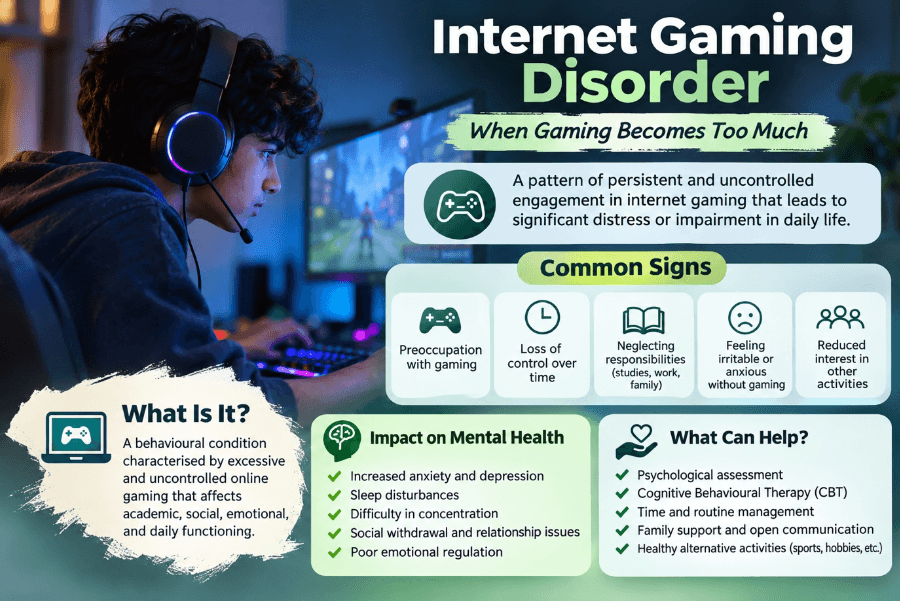
Internet Gaming Disorder refers to a pattern of persistent and recurrent engagement in internet gaming that results in significant distress or impairment in personal, social, educational, or occupational functioning.
The American Psychiatric Association included Internet Gaming Disorder in Section III of the Diagnostic and Statistical Manual of Mental Disorders, Fifth Edition (DSM-5) as a condition requiring further research.
The World Health Organization also recognises Gaming Disorder in the International Classification of Diseases (ICD-11). It is characterised by impaired control over gaming, increasing priority given to gaming over other activities, and continuation of gaming despite negative consequences.
It is important to understand that playing video games frequently does not automatically mean someone has a gaming disorder. The key concern is the loss of control and the negative impact on everyday life.
Common Signs and Symptoms of Internet Gaming Disorder
Recognising the early warning signs can help individuals and families seek appropriate support.Some common signs include:
1. Preoccupation with Gaming
Constantly thinking about games, planning the next gaming session, or feeling mentally occupied with gaming even when engaged in other activities.
2. Loss of Control
Difficulty limiting gaming time or repeatedly failing to reduce or stop gaming despite making attempts.
3. Neglecting Responsibilities
Ignoring academic assignments, professional responsibilities, household activities, or personal commitments because of gaming.
5. Reduced Interest in Other Activities
Losing interest in hobbies, outdoor activities, social gatherings, and previously enjoyable experiences.
6. Continuing Despite Negative Consequences
Continuing excessive gaming even when it affects physical health, relationships, academic performance, or emotional well-being.
7. Using Gaming to Escape Emotional Distress
Playing games excessively to avoid feelings of loneliness, sadness, stress, anxiety, or other difficult emotions.
Psychological Causes and Risk Factors
Internet Gaming Disorder does not have one single cause. It may develop through a combination of psychological, social, environmental, and biological factors.
Some important contributing factors include:
· Stress and Anxiety: Individuals may use gaming as a temporary escape from academic pressure, workplace stress, or personal difficulties.
· Depression and Loneliness: Online gaming may provide a sense of belonging, achievement, and social connection.
· Low Self-Esteem: Virtual achievements and recognition may offer a sense of competence that individuals struggle to experience in real life.
· Emotional Regulation Difficulties: Some individuals find it difficult to manage uncomfortable emotions and use gaming as a coping mechanism.
· Reward and Reinforcement: Game features such as rewards, achievements, challenges, and competitive rankings can encourage repeated engagement.
· Social Isolation: Individuals experiencing limited real-world social interaction may become increasingly dependent on online gaming communities.
Understanding these underlying factors is essential for developing effective psychological interventions.
How Does Internet Gaming Disorder Affect Mental Health?
Excessive gaming can affect several dimensions of psychological and physical well-being.
1. Anxiety and Depression
Excessive gaming may be associated with symptoms of anxiety and depression, particularly when gaming becomes a way to avoid real-life challenges or emotional difficulties.
2. Sleep Disturbances
Late-night gaming can interfere with sleep routines, reduce sleep duration, and affect concentration, mood, and daytime functioning.
3. Attention and Concentration Difficulties
Spending excessive time gaming may interfere with academic and professional responsibilities and make it difficult to maintain balanced daily routines.
4. Social and Relationship Problems
Individuals may gradually withdraw from family members, friends, and social activities, resulting in misunderstandings and relationship conflicts.
5. Emotional Regulation Problems
Difficulty managing frustration, anger, disappointment, and boredom may become more noticeable when gaming is restricted or unavailable.
6. Physical Health Concerns
Prolonged gaming may contribute to sedentary behaviour, eye strain, headaches, poor posture, and irregular eating habits.
Internet Gaming Disorder Among Children and Adolescents
Children and adolescents may be particularly vulnerable to problematic gaming because their self-regulation and impulse-control abilities are still developing.Academic pressure, peer influence, social acceptance, and the attraction of online gaming environments can contribute to excessive gaming habits.
Parents and caregivers should look for changes such as:
· Declining academic performance.
· Irregular sleeping and eating patterns.
· Withdrawal from family and friends.
· Difficulty completing everyday responsibilities.
Rather than responding only with punishment or restrictions, parents should encourage open communication, understand the reasons behind excessive gaming, and establish healthy digital boundaries.
The Role of Psychological Assessment
Psychological assessment plays an important role in identifying problematic gaming behaviour and understanding its underlying causes.
. A qualified mental health professional may assess:
· Gaming frequency, duration, and patterns.
· Emotional and behavioural regulation.
· Anxiety and depressive symptoms.
· Impulsivity and attention-related difficulties.
· Sleep quality and lifestyle habits.
· Family relationships and social functioning.
· Academic or occupational impairment.
Assessment tools such as the Internet Gaming Disorder Scale (IGDS9-SF) may help screen for problematic gaming symptoms.
However, screening questionnaires alone cannot establish a diagnosis. A comprehensive clinical evaluation is necessary to understand the individual's experiences and determine appropriate interventions.
Treatment and Psychological Interventions
Internet Gaming Disorder can be addressed through appropriate psychological interventions, behavioural strategies, and family support.
1. Cognitive Behavioural Therapy (CBT)
CBT is one of the commonly studied psychological approaches for problematic gaming. It helps individuals identify unhealthy thought patterns, understand gaming triggers, develop healthier coping mechanisms, and gradually regain control over their behaviour.
2. Behavioural Interventions
Structured routines, time-management strategies, activity scheduling, and realistic gaming limits can help individuals develop healthier digital habits.
3. Family-Based Interventions
Family involvement is particularly important for children and adolescents. Parents can establish consistent boundaries, encourage alternative activities, and maintain supportive communication.
4. Emotional Regulation Training
Mindfulness, relaxation techniques, stress management, and emotional awareness can help individuals manage difficult feelings without depending excessively on gaming.
5. Addressing Co-existing Mental Health Concerns
Some individuals experiencing problematic gaming may also have anxiety, depression, ADHD, or other psychological difficulties. These concerns should be assessed and addressed by qualified professionals.
6. Relapse Prevention
Identifying triggers, developing alternative coping strategies, and maintaining healthy daily routines can help individuals sustain long-term improvements.
How Can We Develop Healthy Gaming Habits?
Gaming itself is not necessarily harmful. The objective should be to encourage responsible and balanced technology use.
Some practical strategies include:
1. Establish fixed gaming schedules and take regular breaks.
2. Avoid gaming immediately before bedtime.
3. Prioritise education, work, physical activity, and family responsibilities.
4. Explore offline hobbies such as reading, sports, music, and creative activities.
5. Maintain meaningful face-to-face social interactions.
6. Monitor emotional triggers that lead to excessive gaming.
7. Seek professional support when gaming begins to affect everyday functioning.
When Should You Seek Professional Help?
Professional support may be necessary when an individual repeatedly loses control over gaming, neglects important responsibilities, experiences significant relationship difficulties, or continues gaming despite serious negative consequences.Early identification and timely psychological intervention can help prevent further impairment and support healthier behavioural patterns.Parents, educators, and mental health professionals all have an important role in promoting awareness and encouraging responsible digital behaviour.
Conclusion:
Internet Gaming Disorder reminds us that technology, while offering numerous opportunities for entertainment and connection, must be used with awareness and balance.Gaming should be a source of enjoyment rather than an activity that controls an individual's daily life. Understanding the psychological factors behind excessive gaming, recognising early warning signs, and seeking professional support can make a meaningful difference.