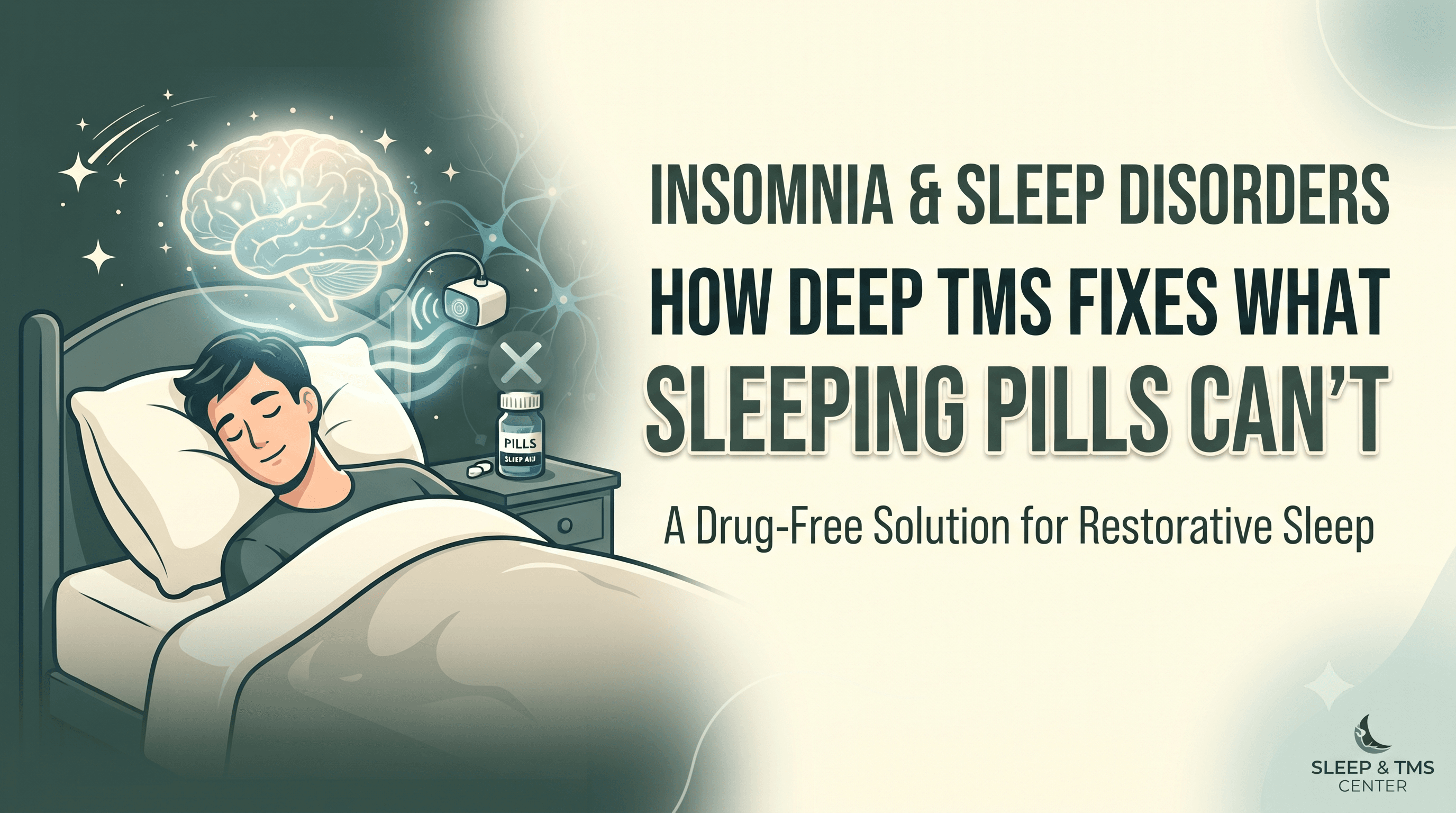
India has a sleep crisis, and Gurugram is at its epicenter. In a city where working past midnight is common, where the commute itself eats hours that should be sleep, and where digital devices stay in hands until the moment before a person closes their eyes, sleep deprivation has become so normalized that many people no longer even identify their situation as a problem requiring help. But chronic insomnia — difficulty falling asleep, staying asleep, or achieving restorative sleep despite adequate opportunity — is a clinical condition with measurable consequences for mental health, physical health, cognitive performance, and longevity. And it is one of the most undertreated conditions in Gurugram's otherwise health-conscious professional population.
This blog examines chronic insomnia — what drives it, why sleeping pills are not the long-term answer, and how advanced treatments including Deep TMS are changing the landscape for patients who have struggled with sleep for months or years without adequate relief.
The Scale of the Problem: Sleep in Gurugram's Context
The relationship between Gurugram's lifestyle and sleep is comprehensively problematic. Corporate culture rewards early starts and late finishes, leaving inadequate sleep windows even for those who want them. The city's noise levels — traffic, construction, and high-density living — create environmental sleep disruption. Blue light exposure from devices suppresses melatonin in the hours before bed. Caffeine consumption to manage daytime fatigue from poor sleep creates a self-reinforcing cycle that sustains the problem. Anxiety and rumination — particularly high in a high-pressure professional environment — turn the bed into a place associated with racing thoughts rather than rest.
The consequences of chronic sleep loss extend far beyond tiredness. Persistent sleep deprivation increases risk for depression, anxiety disorders, cardiovascular disease, metabolic disorders, and immune dysfunction. In the workplace, sleep-deprived professionals show measurable impairment in decision-making, creativity, and emotional regulation — precisely the capacities that Gurugram's professional environment most demands.
Types of Sleep Disorders: Beyond Simple Insomnia
Sleep medicine distinguishes several distinct conditions under the broader umbrella of sleep disorders. Chronic Insomnia Disorder is the most common — defined as difficulty with sleep initiation, maintenance, or quality at least three nights per week for at least three months, causing daytime impairment. Sleep Maintenance Insomnia involves waking repeatedly during the night or too early in the morning. Initial Insomnia involves difficulty falling asleep despite fatigue. Mixed Insomnia involves both.
Sleep Apnea — in which breathing repeatedly stops during sleep — causes fragmented, unrestorative sleep and is significantly underdiagnosed in India. It is worth ruling out with a sleep study in any patient with chronic sleep complaints, excessive snoring, or daytime sleepiness despite adequate time in bed. Circadian Rhythm Disorders involve misalignment between the body's internal clock and external sleep-wake demands — particularly common in shift workers and people with highly irregular schedules. Restless Legs Syndrome and Periodic Limb Movement Disorder cause discomfort and involuntary movement that fragment sleep.
Why Sleeping Pills Are Not the Long-Term Answer
Benzodiazepines and Z-drugs (zolpidem, eszopiclone) are the most commonly prescribed sleep medications in India, and they do produce sedation — but sedation is not the same as restorative sleep. These medications suppress the deeper, more restorative sleep stages, reduce REM sleep, and produce dependency with regular use. Tolerance develops, meaning higher doses are needed for the same effect. Withdrawal produces rebound insomnia that is often worse than the original problem. Long-term use is associated with cognitive decline, fall risk in older adults, and worsening of the underlying insomnia.
This is not to say that short-term sleep medication use is never appropriate — it can bridge difficult periods. But as a long-term solution, sleeping pills address the symptom without addressing the cause, and at a cost that increases over time.
Cognitive Behavioral Therapy for Insomnia: The Gold Standard
CBT-I (Cognitive Behavioral Therapy for Insomnia) is internationally recognized as the first-line treatment for chronic insomnia. It is more effective than sleeping pills for long-term insomnia, produces durable improvements that persist after treatment ends, and has no side effects. CBT-I addresses the behavioral and cognitive factors that perpetuate insomnia — including counterproductive sleep behaviors, dysfunctional beliefs about sleep, and the hyperarousal in bed that insomnia patients develop over time. Components include sleep restriction therapy, stimulus control, relaxation techniques, and cognitive restructuring of sleep-related anxiety.
At Positive Mind Care, Gurugram, CBT-I is a core component of chronic insomnia treatment, delivered alongside the psychiatric assessment needed to identify any underlying mood, anxiety, or other conditions driving the sleep problem.
Where Deep TMS Comes In: Insomnia That Doesn't Respond to CBT-I
For a significant proportion of patients, chronic insomnia is deeply intertwined with anxiety, depression, or hyperarousal states that don't fully respond to CBT-I alone. In these cases, directly addressing the neurological hyperarousal through Deep TMS can produce meaningful improvement in sleep alongside its direct effects on mood and anxiety.
Deep TMS modulates the prefrontal cortex and related brain circuits that are overactive in the hyperarousal state characteristic of chronic insomnia, particularly the anxiety-driven "can't switch off" pattern that keeps many people awake despite genuine fatigue. Patients undergoing Deep TMS for depression or anxiety frequently report improvement in sleep quality as one of the earliest treatment effects — often appearing within the first two weeks of treatment, before the mood improvements become fully established.
For patients whose insomnia is treatment-resistant — who have tried CBT-I and medication without adequate improvement — combining Deep TMS with CBT-I at a clinic with expertise in both, like Positive Mind Care, Gurugram, offers the most comprehensive approach currently available.
Lifestyle Changes That Support Sleep Recovery
Effective insomnia treatment always includes structured attention to sleep hygiene — not as vague advice but as specific behavioral prescriptions. Maintaining a consistent wake time seven days a week (even after a bad night) is the most powerful single behavioral intervention for circadian rhythm stabilization. Restricting time in bed to actual sleep time in the early phase of CBT-I builds sleep drive. Eliminating caffeine after 1 pm, avoiding screens for 60 minutes before bed, and keeping the bedroom cool and dark address the common environmental sleep disruptors.
Exercise — regular, moderate, preferably in the morning or afternoon rather than late evening — is one of the most effective sleep-promoting interventions available, yet remains underutilized in clinical insomnia management.
Frequently Asked Questions
Q1. Is it normal to need 30+ minutes to fall asleep? An occasional difficult night is normal, but consistently taking more than 30 minutes to fall asleep three or more nights per week suggests clinically significant insomnia that warrants evaluation.
Q2. Can insomnia cause depression? Yes — the relationship is bidirectional. Chronic insomnia significantly increases depression risk, and depression causes and worsens insomnia. Addressing both simultaneously produces the best outcomes.
Q3. Are herbal sleep aids safer than prescription sleeping pills? While herbal aids (like melatonin for circadian issues) have less dependency risk, they also have limited evidence for chronic insomnia and don't address underlying causes. CBT-I and appropriate clinical treatment remain the evidence-based standard.
Q4. Where can I get insomnia treatment in Gurugram? Positive Mind Care, Gurugram, offers comprehensive sleep disorder assessment and treatment, including CBT-I, sleep-targeted psychiatric support, and Deep TMS where indicated for treatment-resistant cases.
Conclusion
Chronic insomnia is not something to simply endure or manage indefinitely with sleeping pills. It is a treatable condition with evidence-based solutions — chief among them CBT-I, and for resistant cases, advanced Deep TMS therapy. In Gurugram, where the drivers of poor sleep are environmental, cultural, and neurological all at once, addressing insomnia properly requires expertise across all these dimensions. Positive Mind Care brings this integrated expertise to patients who are ready to finally sleep well.