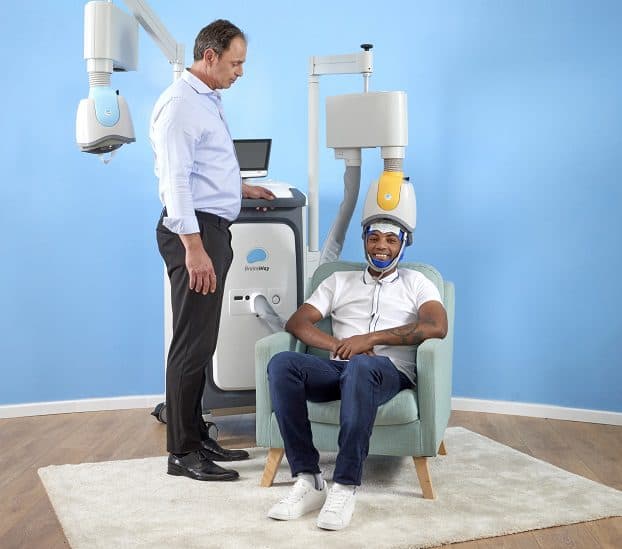
For decades, mental health treatment relied mainly on medications and talk therapy. But many patients saw little to no improvement — and often experienced side effects. That’s when Deep Transcranial Magnetic Stimulation (Deep TMS) changed the game. This non-invasive therapy uses magnetic pulses to reach deeper brain regions involved in depression, anxiety, and OCD — areas that traditional treatments often miss. Backed by clinical trials and FDA clearance, Deep TMS is now redefining how the world treats persistent mental health conditions — safely, precisely, and without medication.
1 . Obsessive Compulsive Disorder
For those who have not reacted well to medicine or therapy alone, Deep TMS, which is FDA-approved for OCD, provides hope. There is no pain during the procedure, and neither anaesthesia nor hospitalisation is necessary. Many patients report feeling more at ease, in control, and less confined by their thoughts after multiple sessions. When paired with therapy, Deep TMS can assist in building permanent relief and enhance overall quality of life. Talk therapy and medication were the mainstays of mental health care for many years.
2 Major Depressive Disorder
It is a serious condition that can leave a person feeling hopeless, tired, and emotionally drained. Traditional treatments like medications and therapy work for many, but not for everyone. Deep TMS is FDA-approved for treatment-resistant depression and offers a new path to recovery. It works by activating underactive areas of the brain responsible for mood, motivation, and energy.
3 Addiction
Deep TMS enhances the sober journey when paired with counselling and a treatment strategy. It is particularly helpful for those who, even after detox or beginning therapy, still have intense cravings. It gradually improves emotional stability, lowers relapse rates, and raises the likelihood of long-term recovery. For people who are making a concerted effort to overcome their addiction, Deep TMS is a helpful and nonjudgmental technique.
4 Parkinsons
Deep Transcranial Magnetic Stimulation (Deep TMSTM) is a non-invasive, safe, and effective* treatment for Parkinson's disease that is offered by BrainsWay. Patients experience notable improvements as a result of the treatment, which involves magnetic stimulation of Parkinson's disease-related brain networks and structures.
This operation is performed as an outpatient and does not require anaesthetic or hospitalisation, is usually well tolerated, and has little systemic adverse effects.
The CE* and ANIVISA have authorised BrainsWay's treatment for Parkinson's disease.
5 Autism
Deep Transcranial Magnetic Stimulation (Deep TMS is a safe, non-invasive, and effective* treatment for autism that is offered by BrainsWay. Patients experience notable improvements as a result of the treatment, which involves magnetic stimulation of brain networks and regions linked to autism. It is an outpatient operation that has few systemic adverse effects, is usually well tolerated, and doesn't require hospitalisation or anaesthesia. The CE* has authorised BrainsWay's treatment for adult autism.
6 Depression
Deep TMS: An improvement on the conventional, figure-8 TMS treatment, Deep Transcranial Magnetic Stimulation, or Deep TMS, addresses some of the problems of its predecessor. Similar to other non-invasive treatments, Deep TMS was first offered in 1985 and uses a magnetic field to safely control the neuronal activity of brain regions linked to depression and other mental health issues. Deep TMS can be integrated into a person's regular routine and doesn't require anaesthesia, and it is FDA-approved.
7 Anxiety
An improvement on the conventional, figure-8 TMS treatment, Deep Transcranial Magnetic Stimulation, or Deep TMS, addresses some of the problems of its predecessor. Similar to other non-invasive treatments, Deep TMS was first offered in 1985 and uses a magnetic field to safely control the neuronal activity of brain regions linked to depression and other mental health issues. Deep TMS can be integrated into a person's regular routine and doesn't require anaesthesia.
Deep TMS is transforming the way we approach mental and neurological health — offering safe, non-invasive, and clinically proven relief for conditions like depression, OCD, anxiety, addiction, Parkinson’s, and autism. By targeting deep brain regions often missed by traditional treatments, it delivers hope where medications and talk therapy may have fallen short. With minimal side effects and no downtime, Deep TMS empowers patients to reclaim their well-being and quality of life.