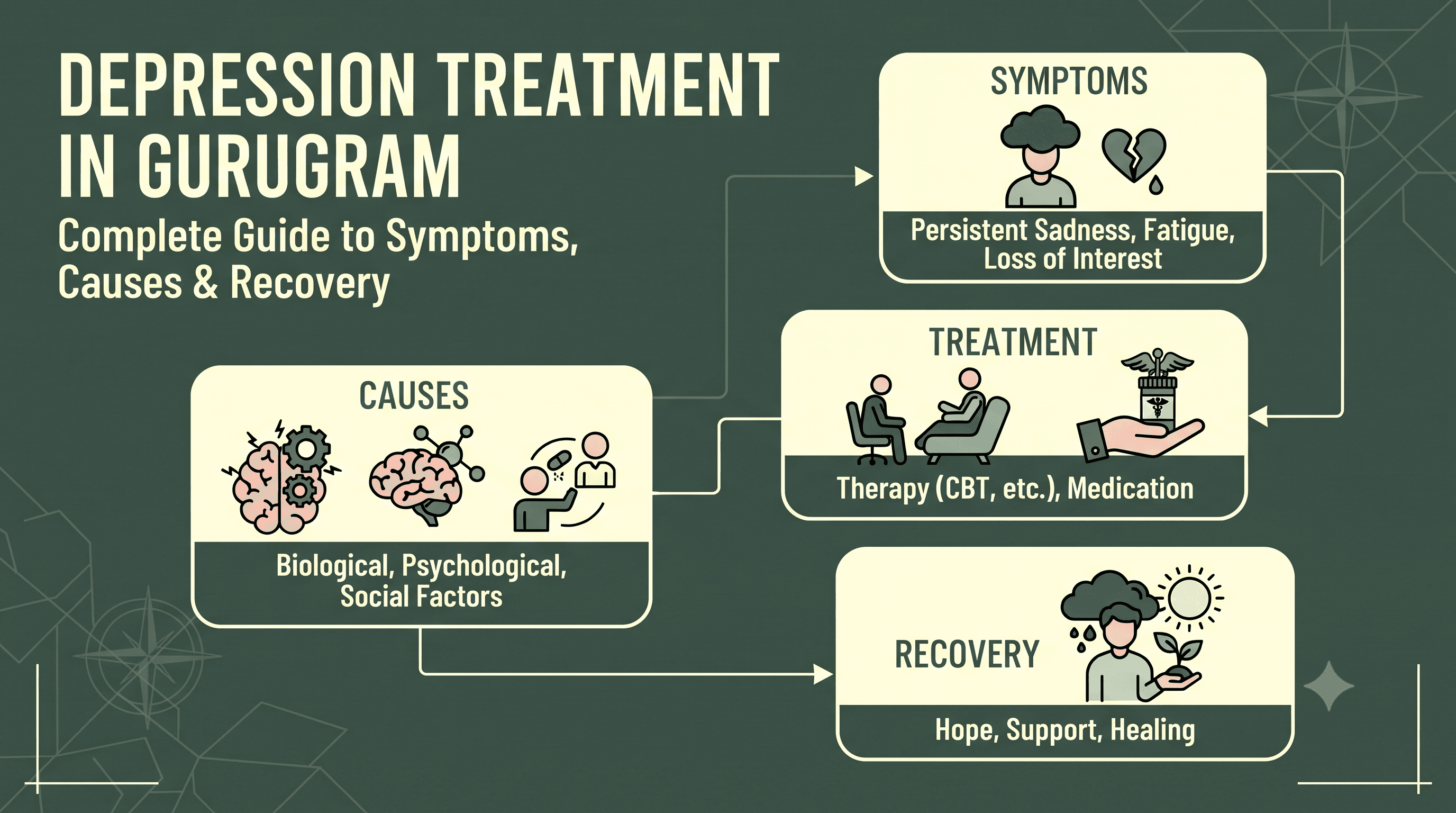
Depression is one of the most common — and most commonly misunderstood — mental health conditions affecting people in Gurugram today. It is not sadness. It is not weakness. It is not something that can be resolved by "thinking positive" or "getting on with things." Depression is a clinically recognized, neurologically grounded disorder that affects how a person thinks, feels, sleeps, eats, works, and relates to others. When it is moderate or severe, it can be among the most disabling conditions a person faces. And critically, it is highly treatable — when the right treatment is applied.
This comprehensive guide explains what depression is, why it develops, how it presents, and what modern treatment options — including the advanced Deep TMS therapy now available in Gurugram — can offer to those seeking recovery.
What Is Clinical Depression?
Clinical depression — formally called Major Depressive Disorder (MDD) — is distinct from the normal sadness and low mood that everyone experiences periodically in response to difficult life events. In MDD, depressed mood or loss of interest in previously enjoyable activities persists for at least two weeks and is accompanied by a cluster of additional symptoms that impair daily functioning.
The World Health Organization recognizes depression as one of the leading causes of disability worldwide, affecting more than 280 million people globally. In India, prevalence estimates suggest that depression affects a significant portion of the adult population, with urban centers like Gurugram seeing particularly high rates driven by work-related stress, social isolation, and cultural barriers to seeking help.
What Causes Depression?
Depression has no single cause — it results from an interaction of genetic, neurobiological, psychological, and environmental factors. Neurobiologically, depression involves disrupted communication in brain circuits involving the prefrontal cortex, hippocampus, and amygdala, along with dysregulation of neurotransmitters including serotonin, norepinephrine, and dopamine.
Genetic factors contribute meaningfully — having a first-degree relative with depression roughly doubles a person's lifetime risk. Psychological factors such as a tendency toward negative thinking styles, perfectionism, or low self-esteem create vulnerability. Environmental triggers — including bereavement, relationship breakdowns, job loss, financial stress, or chronic illness — can precipitate depressive episodes in vulnerable individuals. In Gurugram's high-pressure corporate environment, the combination of chronic work stress, reduced social support from nuclear family structures, and cultural stigma around mental health creates particularly fertile ground for depression to develop.
How Depression Presents: Recognizing the Symptoms
Depression presents differently in different people, which sometimes makes it hard to recognize. Core symptoms include persistent low mood or emotional emptiness, and loss of interest or pleasure in activities previously enjoyed — a symptom called anhedonia that is particularly characteristic of clinical depression.
Additional symptoms include significant changes in appetite or weight, disrupted sleep, fatigue and loss of energy, difficulty thinking clearly, concentrating, or making decisions, feelings of worthlessness or excessive guilt, and in severe cases, recurrent thoughts of death or suicidal ideation. Importantly, depression also frequently presents with prominent physical symptoms — persistent headaches, back pain, digestive problems — that may initially direct people toward physical investigation rather than mental health support.
Depression in Gurugram's Context
Several features of life in Gurugram specifically amplify depression risk. Chronic work stress and burnout in the corporate and technology sectors are well-established depression risk factors, and Gurugram's demanding professional culture generates both at high rates. Social isolation — from extended family networks, from friends left behind in smaller cities, and from neighbors in high-rise residential complexes — removes protective social support. The high financial cost of living in Gurugram adds economic stress, and the competitive social environment can amplify feelings of inadequacy and failure.
Post-pandemic, many Gurugram professionals have also experienced grief, economic disruption, and loss of normalcy that left lasting mental health impacts. Recognition and treatment of depression in this context has never been more important.
Modern Treatment Approaches for Depression
Effective depression treatment in Gurugram includes several evidence-based options. Antidepressant medication — particularly SSRIs and SNRIs — remains a frontline treatment that works well for many patients. Psychotherapy, especially Cognitive Behavioral Therapy and Interpersonal Therapy, provides effective treatment for mild to moderate depression and enhances medication outcomes in more severe cases.
For patients who don't respond adequately to medication and therapy, Deep TMS Therapy represents a major advance. It is the most established non-medication biological treatment for depression, with FDA approval specifically for Major Depressive Disorder and a robust evidence base showing significant response rates even in patients who have failed multiple medication trials. Positive Mind Care, Gurugram, was Delhi-NCR's first clinic to offer this technology, making this advanced treatment accessible to patients who previously had no local option for it.
The Depression-Physical Health Connection
The relationship between depression and physical health is bidirectional and clinically important. Chronic physical conditions — including cardiovascular disease, diabetes, chronic pain, and inflammatory disorders — significantly increase depression risk, while depression itself worsens outcomes in virtually every chronic physical condition it accompanies. This means that for many patients presenting with depression in Gurugram, a thorough physical health assessment is a valuable component of comprehensive care.
Several physical factors can specifically contribute to or maintain depression: thyroid dysfunction (both hypo and hyperthyroidism), vitamin D deficiency (common in India despite abundant sunlight, due to limited outdoor exposure in many professionals), B12 deficiency (particularly in vegetarian populations), and chronic low-grade inflammation. Identifying and addressing these factors alongside antidepressant treatment or Deep TMS can meaningfully enhance treatment response.
Furthermore, addressing depression often has measurable positive ripple effects on physical health — patients who recover from depression typically show improvements in sleep quality, immune function, pain tolerance, and cardiovascular markers. This two-way interaction underscores why treating depression isn't just about mental wellbeing; it is a meaningful investment in overall, whole-body health that Gurugram's health-conscious professionals are increasingly recognizing, prioritizing, and benefiting from when they seek comprehensive care early.
Frequently Asked Questions
Q1. How do I know if I have clinical depression or just low mood? If low mood or loss of interest has persisted for more than two weeks and is affecting your work, relationships, or daily functioning, clinical assessment is warranted. A qualified psychiatrist can distinguish between situational distress and clinical depression.
Q2. Is depression treatable without medication? For mild depression, therapy and lifestyle modifications can be sufficient. For moderate to severe depression, medication and advanced options like Deep TMS typically produce better outcomes than therapy alone.
Q3. How long does depression treatment take? Antidepressants typically show meaningful effect within 4-8 weeks. A Deep TMS course runs 4-6 weeks and often shows improvement within the first 2-3 weeks. Most patients see significant improvement within 3 months of starting proper treatment.
Q4. Can depression come back after treatment? Depression can recur, particularly in those with multiple prior episodes. Ongoing maintenance treatment and lifestyle factors significantly reduce relapse risk.
Conclusion
Depression is not a character flaw and it is not permanent. It is a medical condition with real neurological underpinnings and effective, evidence-based treatments. In Gurugram, modern facilities including advanced Deep TMS therapy are now available, offering hope and real outcomes for everyone from first-episode depression patients to those who have struggled with the condition for years. Seeking help is the most important decision you can make.