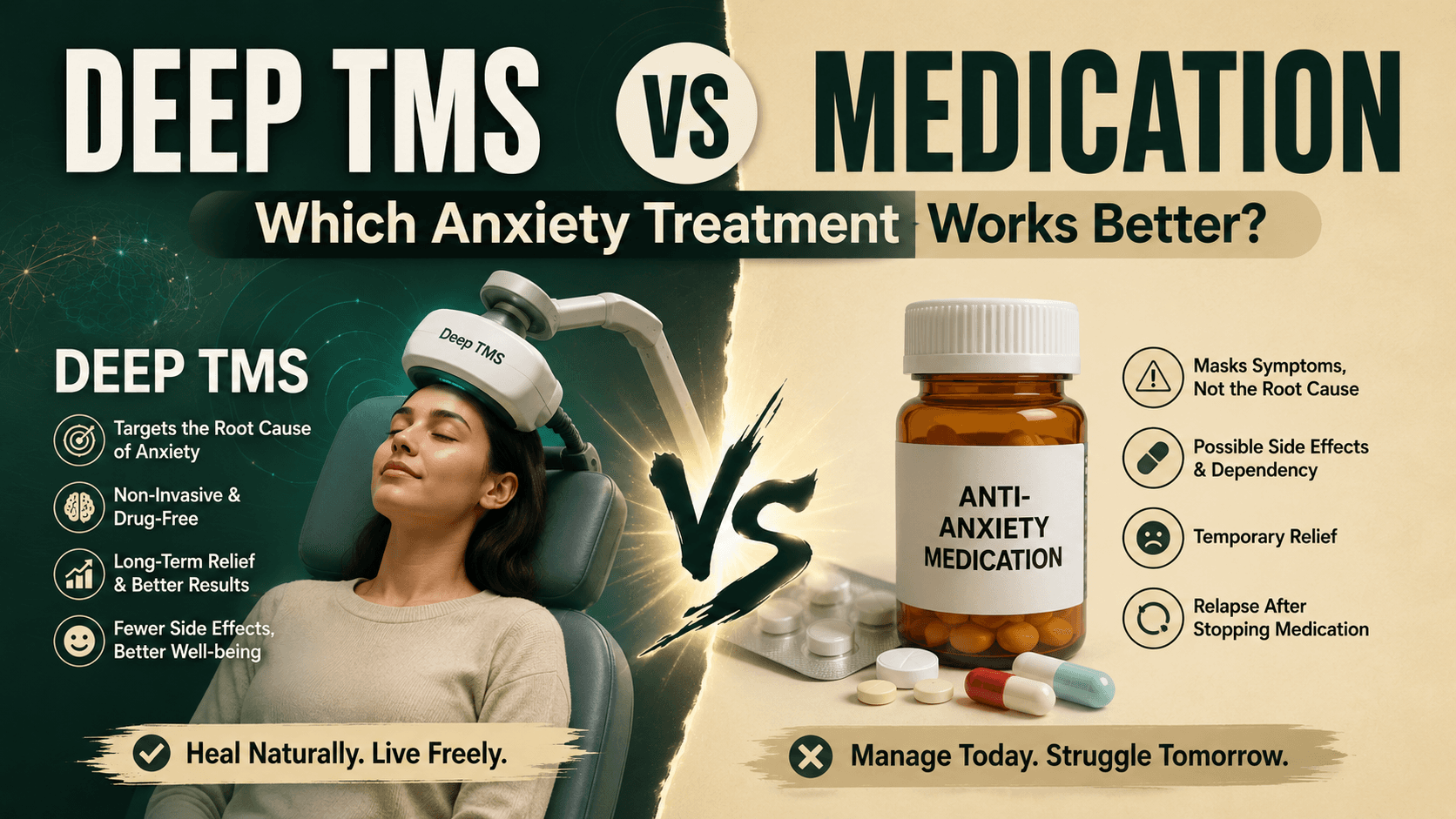
Deep TMS vs Medication: Which Anxiety Treatment Works Better?
When anxiety disorder is diagnosed, the first and most common question that arises is — "do I need to take medicines, and for how long?" For decades, medication has been the primary approach to anxiety treatment, but today, advanced, non-invasive technology like Deep TMS Therapy has given patients a whole new alternative. In this blog, we will compare both treatment options in detail, so you can make an informed decision for yourself or your family member.
Medication: The Traditional Approach
For anxiety disorders, doctors generally prescribe SSRIs (Selective Serotonin Reuptake Inhibitors), SNRIs, or benzodiazepines. These medicines help balance brain neurotransmitters — such as serotonin and norepinephrine — which reduces anxiety symptoms.
Benefits of Medication include wide availability and affordability, and they can even be prescribed by General Physicians. Their mechanism is well-researched and has been in use for decades.
Limitations of Medication are also significant. Results can take several weeks or months to appear. Side effects such as weight gain, nausea, drowsiness, sexual dysfunction, or emotional numbness are common. Some patients become dependent on medicines and face withdrawal symptoms when stopping them. Most importantly, some patients — known as having "treatment-resistant anxiety" — don't respond adequately to medication.
Deep TMS: The Modern Alternative
Deep Transcranial Magnetic Stimulation is an FDA-approved, non-invasive procedure that directly targets specific neural circuits in the brain through magnetic pulses, bypassing the chemical pathway altogether.
Benefits of Deep TMS include its drug-free nature, meaning there are no systemic side effects that come with medication. It has shown effective results even in treatment-resistant cases, especially patients who didn't benefit from medication. Patients can resume normal activity immediately after sessions — there's no sedation effect. Research, such as a 2020 study published in Depression and Anxiety journal, showed significant reduction in generalized anxiety disorder symptoms following Deep TMS treatment.
H1 Coil technology, used in Deep TMS Therapy, has an interesting finding — successful outcomes have been predicted even in patients with higher baseline anxiety levels, which is a significant advantage compared to traditional treatments, where higher anxiety is often a negative predictor.
Considerations for Deep TMS include a somewhat higher cost compared to medicines, and it requires attending multiple sessions (over a course of weeks) which demands a time commitment.
Which Treatment Is Right for You?
This decision is purely individual, and only a qualified psychiatrist can give the best advice after examining your specific condition. A few factors that are considered:
If Anxiety Is Mild and recently started, combining medication with CBT (Cognitive Behavioral Therapy) can produce good results. If Medicines Haven't Helped or you're not comfortable taking them due to their side effects, Deep TMS can be an excellent alternative. If You Want a Drug-Free Approach for any reason — pregnancy planning, liver/kidney concerns, or simply wanting to avoid medication — Deep TMS could be a suitable option. In Severe Treatment-Resistant Cases, both treatments can also be combined for the best outcomes, with the psychiatrist regularly monitoring the patient's progress and adjusting the treatment plan as needed, so the patient gets the best possible results as quickly as possible without unnecessary trial-and-error.
Combination Approach: Best of Both Worlds
Many modern psychiatric clinics, like Positive Mind Care in Gurugram, follow an integrated approach that combines medication, Deep TMS Therapy, and counselling as needed. Each patient's journey is unique, and a "one-size-fits-all" approach doesn't work.
Experienced psychiatrists design a personalized plan keeping in mind the patient's detailed history, severity of symptoms, previous treatment response, and personal preferences. This might include just Deep TMS, just medication, or a combination of both at times.
Cost and Time Commitment Comparison
Medication is generally affordable in the short term, but total cost can increase over time with long-term use, especially if dose adjustments or side-effect management are needed. Deep TMS involves a higher upfront cost since a complete course involves multiple sessions, but its benefit can be long-lasting and eliminates the need for daily medication.
In terms of time commitment, medication fits easily into a daily routine, while Deep TMS sessions require clinic visits — generally on weekdays, for a few weeks.
Patient Preference Is Also a Valid Factor
Alongside clinical effectiveness, a patient's personal preference and comfort level play an equally important role in treatment decisions. Some people find taking a daily pill more convenient than attending clinic visits for weeks, while others feel exactly the opposite — they're more uncomfortable with the daily reminder and potential side effects of medicines compared to attending a defined treatment course. A good psychiatrist also respects these personal preferences when designing a treatment plan, because patient comfort and commitment directly influence the long-term success of treatment.
Insurance and Affordability Considerations
Financial aspects are also important when choosing treatment. Some health insurance policies cover mental health treatment, including therapy sessions and consultations — this depends on policy terms. For advanced treatments like Deep TMS, it's particularly important to check coverage with your insurance provider, as this is relatively newer technology and not all policies cover it equally.
Many clinics also offer flexible payment plans that make managing treatment costs easier, especially when multiple sessions are involved, making financial planning a little less stressful for patients.
How Doctors Decide Between First-Line and Advanced Options
Psychiatrists typically follow a structured decision-making process rather than jumping straight to advanced treatments. The first consultation usually focuses on understanding symptom history, severity, and any prior treatment attempts. Based on this, a stepped-care approach is common — starting with the least invasive, most established options and escalating only if response is inadequate.
This doesn't mean Deep TMS is reserved only as a "last resort" — for patients who clearly express a preference for drug-free treatment, or who have medical reasons to avoid medication, it can be discussed as a first-line option too. The key is that this decision should always be collaborative between doctor and patient, based on clear communication about expected timelines, costs, and realistic outcomes for each path.
Frequently Asked Questions
Q1. Can Deep TMS and medication be taken together? Yes, in many cases doctors recommend combining both treatments for better and faster results, especially in complex or severe cases.
Q2. Can anxiety come back after stopping medication? This is possible for some patients, especially if underlying psychological patterns haven't been addressed. This is why it's important to include counselling in the treatment plan too.
Q3. How long does the effect of Deep TMS therapy last? Many patients experience long-lasting relief after completing the treatment course, but individual results can vary. Maintenance sessions can be beneficial for some patients.
Q4. Which treatment gives faster results — medicine or Deep TMS? Both generally take a few weeks for noticeable improvement to appear. The exact timeline depends on individual response.
Conclusion
Deep TMS and medication are both valid, evidence-based options for anxiety treatment. Neither is "better" — the best treatment is the one suited to your specific condition, medical history, and preferences. The most important step is consulting a qualified mental health professional who can thoroughly evaluate your situation. Clinics like Positive Mind Care in Gurugram offer both options, allowing patients to choose the best possible treatment according to their needs.