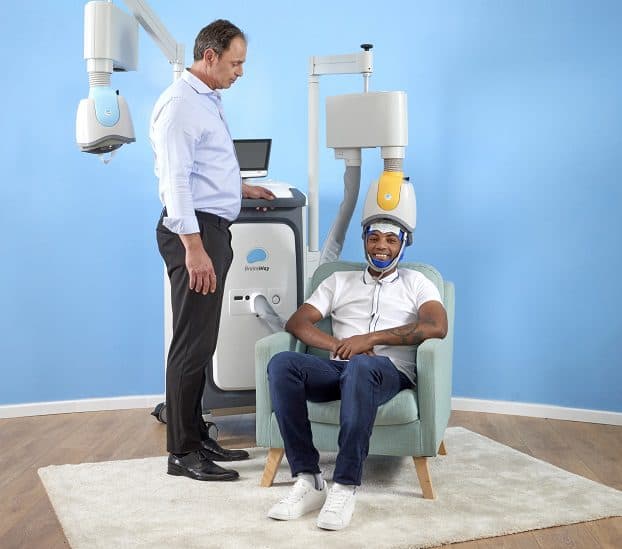
In the dynamic field of psychiatry, creativity is essential to tackling the intricate problems brought on by severe mental illnesses. Deep Transcranial Magnetic Stimulation (Deep TMS), a non-invasive, FDA-approved treatment that uses magnetic pulses to stimulate deep brain regions, is one of the most exciting new developments in recent years. People who have not responded to conventional treatments now have new hope thanks to Deep TMS, which is supported by strong clinical data.
What is Deep TMS
Deep TMS targets certain brain areas linked to mood, emotion control, and cognition by sending short magnetic pulses through a customised helmet. Deep TMS reaches deeper brain structures, including areas frequently linked to psychiatric problems, in contrast to standard TMS, which mainly activates surface cortical areas.
Benefits of Deep TMS in Psychiatry
1 Highly Effective for Treatment-Resistant Conditions
Medication and psychotherapy alone are insufficient for many individuals with severe diseases like Major Depressive Disorder (MDD), Obsessive-Compulsive Disorder (OCD), and PTSD.
Clinical studies have revealed:
MDD: Up to 60% of patients get a significant remission.
OCD: Significant symptom improvement, especially in patients who are drug-resistant.
PTSD: Preliminary research shows less invasive symptoms and better emotional control.
2 Targets the Root Neural Circuitry
Deep TMS directly modifies malfunctioning neural networks, whereas medications indirectly alter the brain's chemistry. It helps restore normal activity in brain circuits that control mood, impulse control, and intrusive thought patterns by activating regions such as the anterior cingulate cortex and the dorsolateral prefrontal cortex.
3 Minimal Side Effects and Non-Invasive
Deep TMS doesn't cause seizures or require anaesthesia like electroconvulsive treatment (ECT) does. Mild and transient side effects, such as headaches or scalp pain, are typical and typically go away after a few sessions.
4 Enhances Neuroplasticity
The brain's capacity to rearrange itself and create new neural connections is known as neuroplasticity, and deep TMS encourages it. Long-lasting improvements in mood, mental clarity, and emotional resilience may result from this, even after treatment is completed.
5 Compatible with Ongoing Therapies
To improve results, it can be used in conjunction with medicine or psychotherapy. It is a common supplementary therapy used by psychiatrists to overcome treatment resistance.
Effectiveness for Serious Psychiatric Disorders
Major Depressive Disorder (MDD
Deep TMS is particularly helpful for treatment-resistant depression (TRD) and has FDA approval for MDD. Remission rates are higher than those of regular TMS,
According to studies published in The Journal of Clinical Psychiatry.
Within two to four weeks, patients frequently report feeling happier.
Obsessive-Compulsive Disorder (OCD)
When CBT and medication are ineffective, OCD is infamously difficult to treat. The anterior cingulate cortex and medial prefrontal cortex, which are overactive in OCD, are the focus of deep TMS. Results published in the American Journal of Psychiatry: After a full course, more than 38% of patients had a reduction in symptoms.
Post-Traumatic Stress Disorder (PTSD)
PTSD is characterised by faulty emotional regulation and hyperactive fear circuitry. Deep TMS can lessen intrusive memories and hypervigilance while assisting in the rebalancing of brain activity. According to early clinical research, basic PTSD symptoms may continue to improve.
Other Emerging Applications
- Bipolar depression
- Schizophrenia negative symptoms
- Addiction and craving reduction
Why Deep TMS is a Game-Changer in Psychiatry
Precise targeting of specific brain areas.
Benefits for many people appear quickly.
Profile that is safe and free of systemic impacts.
Hope for those who don't react to conventional treatments.
Deep TMS is more than just another tool; it is a paradigm shift in the way that psychiatry treats severe and treatment-resistant mental health conditions. It provides a lifeline to patients who have run out of alternatives by directly modifying the deep networks in the brain.
Deep TMS is bridging the gap between neuroscience and compassionate care in the field of modern psychiatry, demonstrating that even the most enduring illnesses can be treated with fresh hope and practical solutions.