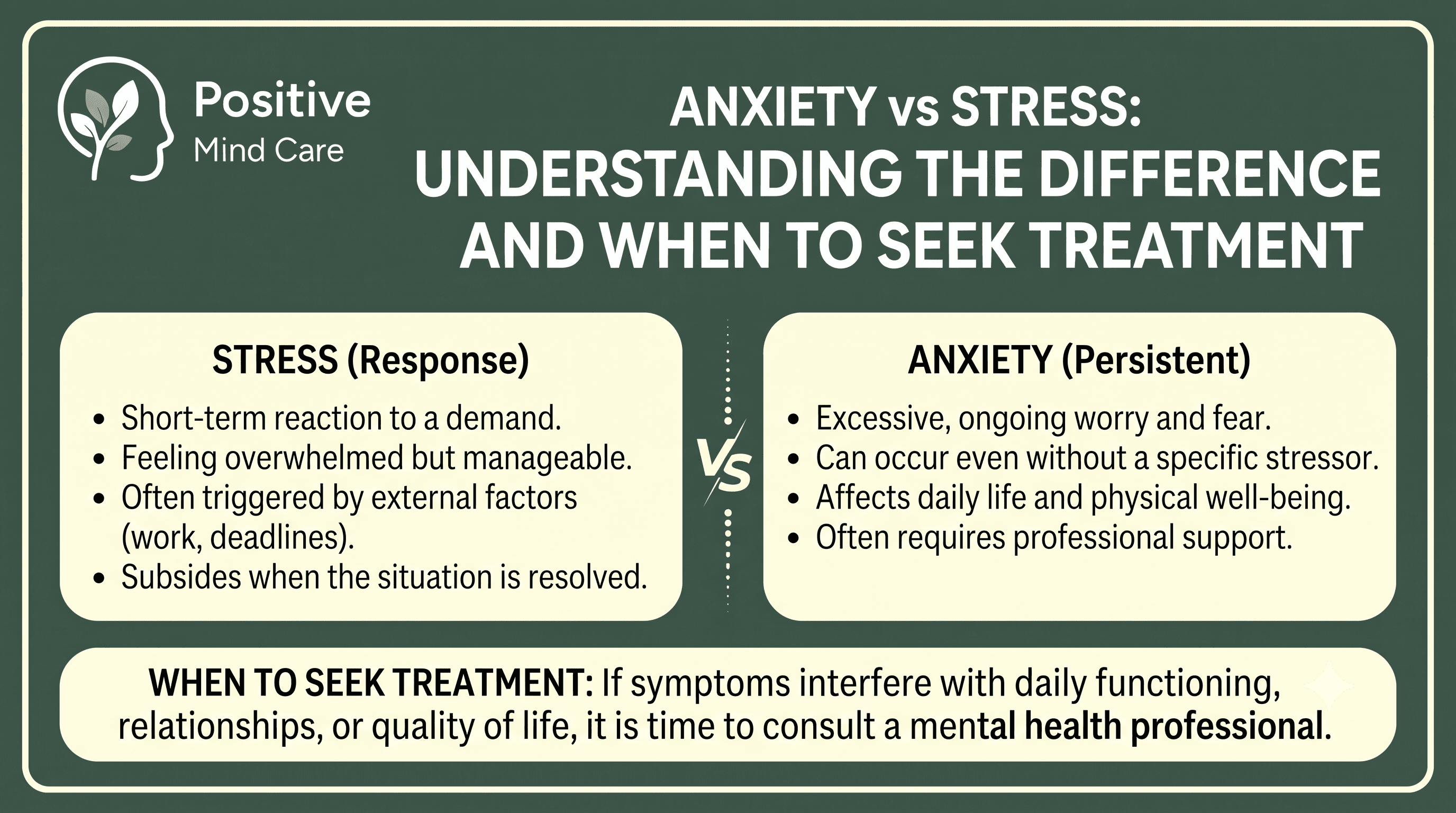
"I'm so stressed out" and "I have anxiety" — these two phrases get used interchangeably in our everyday lives, but from a medical perspective, stress and anxiety are two distinct concepts with significant overlap as well as important differences. Understanding this difference is crucial because it helps us decide when self-management techniques are enough and when seeking professional help becomes necessary. In this blog, we'll clearly differentiate between the two concepts.
What Is Stress?
Stress is our body's natural response to an external pressure or demand such as a deadline, exam, financial problem, or relationship conflict. Stress generally comes with an identifiable trigger, and once that trigger (or stressor) resolves, stress decreases or disappears too.
Stress also has a positive side short-term stress (called "eustress") keeps us motivated and focused, like how a bit of stress before an exam helps us prepare better. The problem arises when stress becomes chronic and continues for a long time without relief.
What Is Anxiety?
Anxiety, compared to stress, is generally a future-oriented emotion involving excessive worry about uncertain or potential threats. The most important difference is that anxiety can sometimes be present even without any specific, identifiable trigger, or it can persist even after the trigger has resolved.
Anxiety Disorder is diagnosed when this excessive worry and fear start significantly impairing daily functioning and continue for at least 6 months. It's a medical condition involving an imbalance in the brain's fear-processing and emotional regulation systems.
Key Differences: Stress vs Anxiety
To differentiate between the two, keep a few key points in mind. Presence of a Trigger stress generally comes with a clear, identifiable source, while anxiety can be present even without any specific trigger. Duration stress decreases once the trigger resolves, while anxiety can persist even after the underlying issue has been resolved.
Intensity and Proportion — stress is generally proportional to the situation, while in anxiety, worry is often disproportionately intense compared to the situation. Physical Symptoms overlap in both (such as muscle tension, fatigue), but panic attacks, persistent restlessness, and chronic physical symptoms are more common in anxiety. Impact on Daily Life temporary stress generally doesn't severely impair daily functioning, while anxiety disorder can significantly affect relationships, work performance, and overall quality of life.
How Stress Can Develop Into Anxiety
An important connection is that chronic, unmanaged stress can eventually develop into anxiety disorder. When the body remains in "stress mode" for a long time, the nervous system becomes over-sensitized, causing the person to feel excessive fear or worry even in small situations — which then becomes a pattern of anxiety disorder.
This is exactly why managing stress in time is important, so it doesn't transform into chronic anxiety.
A Simple Self-Assessment Reflection Exercise
Asking yourself a few honest questions can help differentiate between stress and anxiety. Is my worry related to a specific, identifiable situation? Does this worry decrease once that situation resolves? Do I feel physical symptoms (like racing heart, sweating) even without an obvious trigger? Is my worry so intense that I have to avoid normal activities? If the answers to these questions consistently point toward anxiety disorder meaning the worry is persistent, disproportionate, and life-impairing then seeking professional consultation would be a wise decision.
When Is Self-Management Enough?
If you're experiencing occasional stress related to identifiable triggers that decreases once the trigger resolves, self-management techniques are generally effective. Regular Exercise, Meditation, Deep Breathing, Adequate Sleep, and Maintaining Healthy Social Connections help effectively manage stress.
Time Management and Realistic Goal Setting can also significantly help reduce workplace or academic stress.
When Is Professional Help Necessary?
If worry and fear are persistent, seem unrelated to any specific trigger, and are significantly affecting daily life — work, relationships, sleep, eating habits — this is a clear signal for professional intervention. Panic attacks, avoidance of social situations, or physical symptoms that are medically unexplained are also clear indicators for professional consultation.
If symptoms aren't improving even after self-management techniques, or are worsening, don't delay seeking professional help.
Cultural Context: Normalizing Stress in India
In Indian culture, especially among older generations, stress and anxiety are often normalized by saying "it's part of life," which prevents people from taking their symptoms seriously. Well-meaning but sometimes harmful advice like "everyone goes through it" or "give it some time, it'll get better" delays people from seeking professional help. This cultural tendency, especially in fast-paced urban cities like Gurugram, is gradually changing as younger generations approach mental health conversations more openly, but awareness and education are still needed so everyone can accurately recognize their symptoms and seek timely help.
Professional Support in Gurugram
Positive Mind Care, Gurugram, provides both stress management guidance and clinical anxiety disorder treatment. During the initial consultation, experienced psychiatrists thoroughly evaluate the patient's condition to determine whether it's normal stress or a clinically significant anxiety disorder, and recommend an appropriate treatment plan accordingly — which can range from lifestyle counselling to advanced Deep TMS Therapy.
Workplace and Academic Stress as Common Entry Points
For many people, the first real exposure to chronic stress comes through academic or early-career pressure, and understanding stress at this entry point can shape lifelong coping patterns. Students juggling exams, competitive entrance tests, or first jobs in high-pressure industries often experience their first taste of stress that, left unmanaged, sets a template for how they respond to pressure later in life.
Building healthy stress responses early — rather than normalizing constant overwhelm as simply "how things are" — can meaningfully reduce the likelihood of these patterns calcifying into clinical anxiety disorder by the time someone reaches their thirties or forties.
The Physical Toll of Chronic Unmanaged Stress
Beyond its psychological impact, chronic unmanaged stress also takes a measurable physical toll over time. Elevated cortisol levels sustained over months or years have been linked to increased risk of cardiovascular issues, weakened immune response, and metabolic changes. This is part of why addressing stress early isn't just about mental comfort — it has tangible implications for long-term physical health too.
Recognizing this connection can serve as additional motivation for people who might otherwise dismiss stress management as a lower priority compared to more visible physical health concerns.
Frequently Asked Questions
Q1. Does stress also need treatment? Chronic, unmanaged stress can also benefit from professional guidance, especially if self-management techniques aren't effective or stress is developing into anxiety.
Q2. How do I know if my stress is normal or an anxiety disorder? Duration, intensity, and impact on daily functioning are all key indicators. A qualified professional can provide an accurate assessment.
Q3. Do stress management techniques also work for anxiety disorder? They can be a helpful supplement, but clinically significant anxiety disorder generally needs professional treatment (counselling, medication, or Deep TMS) alongside lifestyle changes alone.
Q4. Does workplace stress automatically become anxiety disorder? No, but if left unmanaged for a long time, it increases the risk of developing anxiety disorder. Early stress management can help prevent this.
Conclusion
Stress and anxiety are both real experiences, but understanding the difference between them helps us take the right action. Occasional stress is a normal human experience that can be managed with healthy coping mechanisms, while anxiety disorder is a medical condition that requires professional treatment. If you're unsure which one you're going through, consulting a qualified mental health professional is the safest and most informed step.